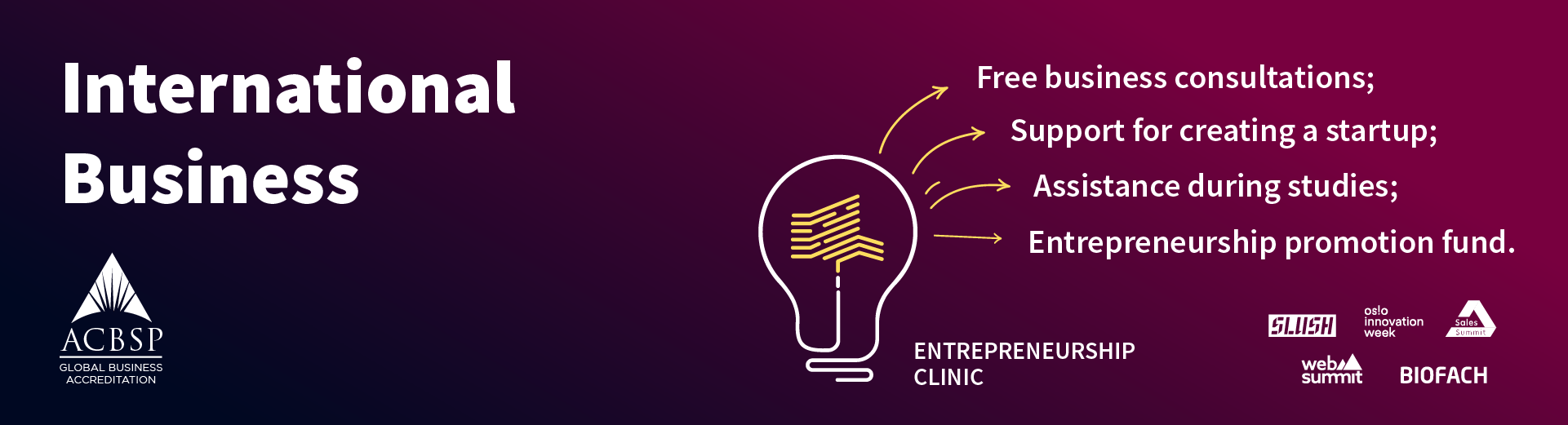
The International Business study program develops an entrepreneurial mindset – one of the most important competencies of the future. The program is designed for future business creators and professional leaders who aspire to become experts in their chosen business field.
Internationally Accredited Study Quality. We are among the TOP 2% of business schools worldwide. The quality of studies at the Vilnius University Business School is recognized by prestigious international accreditations: AMBA (UK) and ACBSP (USA).
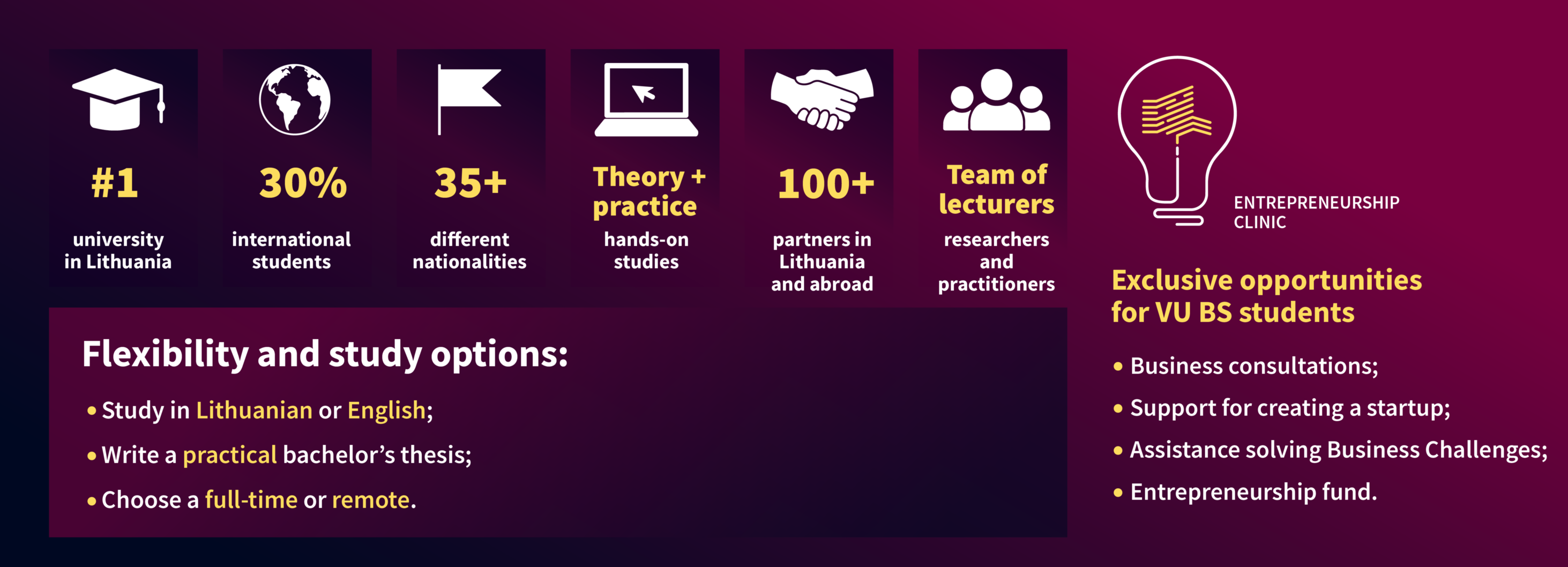
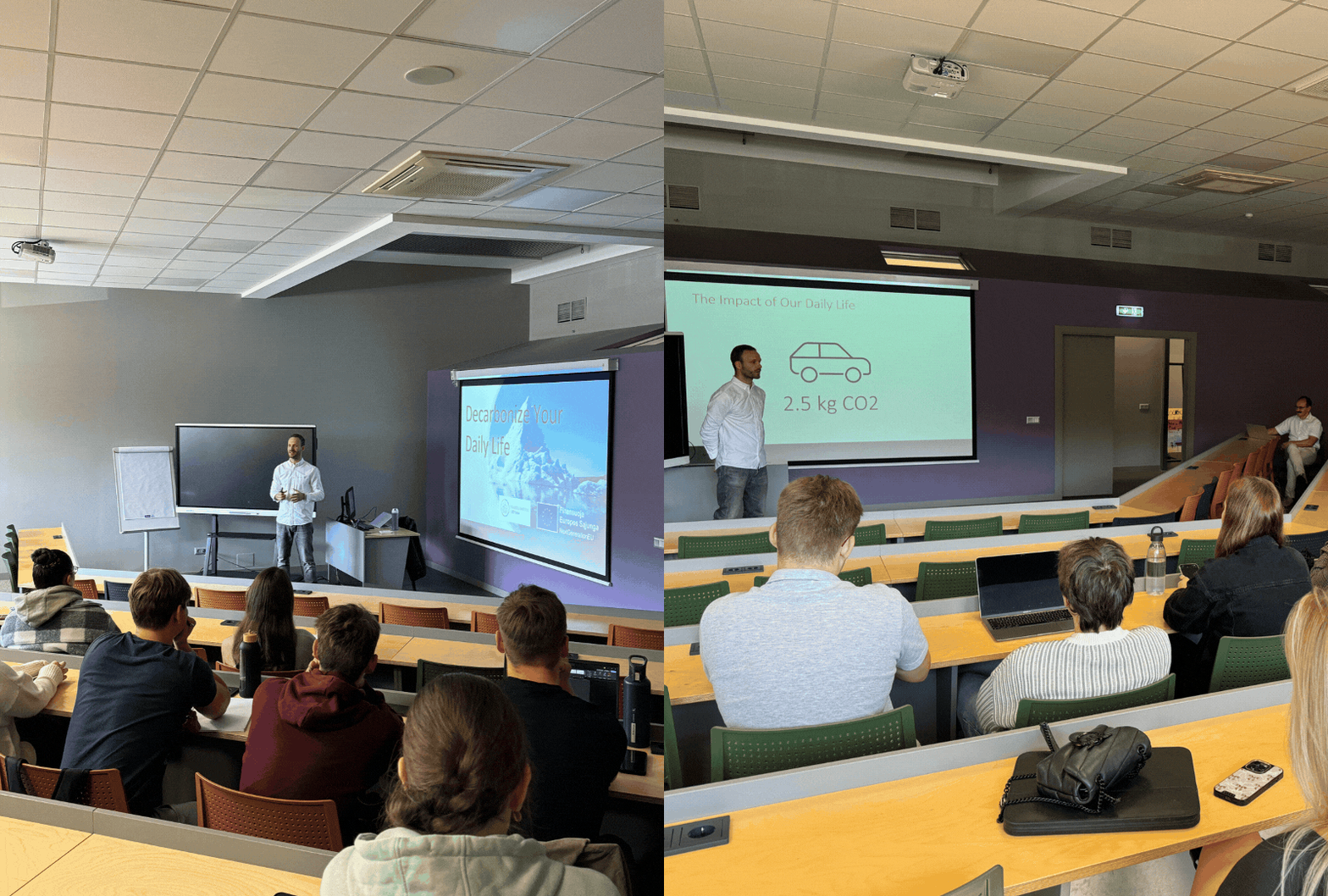
Theory + Practice. The theoretical knowledge acquired during the studies is immediately applied in practice. One of the program’s unique features is real business challenges presented to students by Vilnius University Business School’s partners (companies). Working in teams throughout their studies, students will solve business challenges and pitch their solutions to business representatives every semester.
International Community. The Business School is one of the most global faculties at Vilnius University. More than 30% of our students are international, and our global partner network spans the world.
Learn more about business challenges:
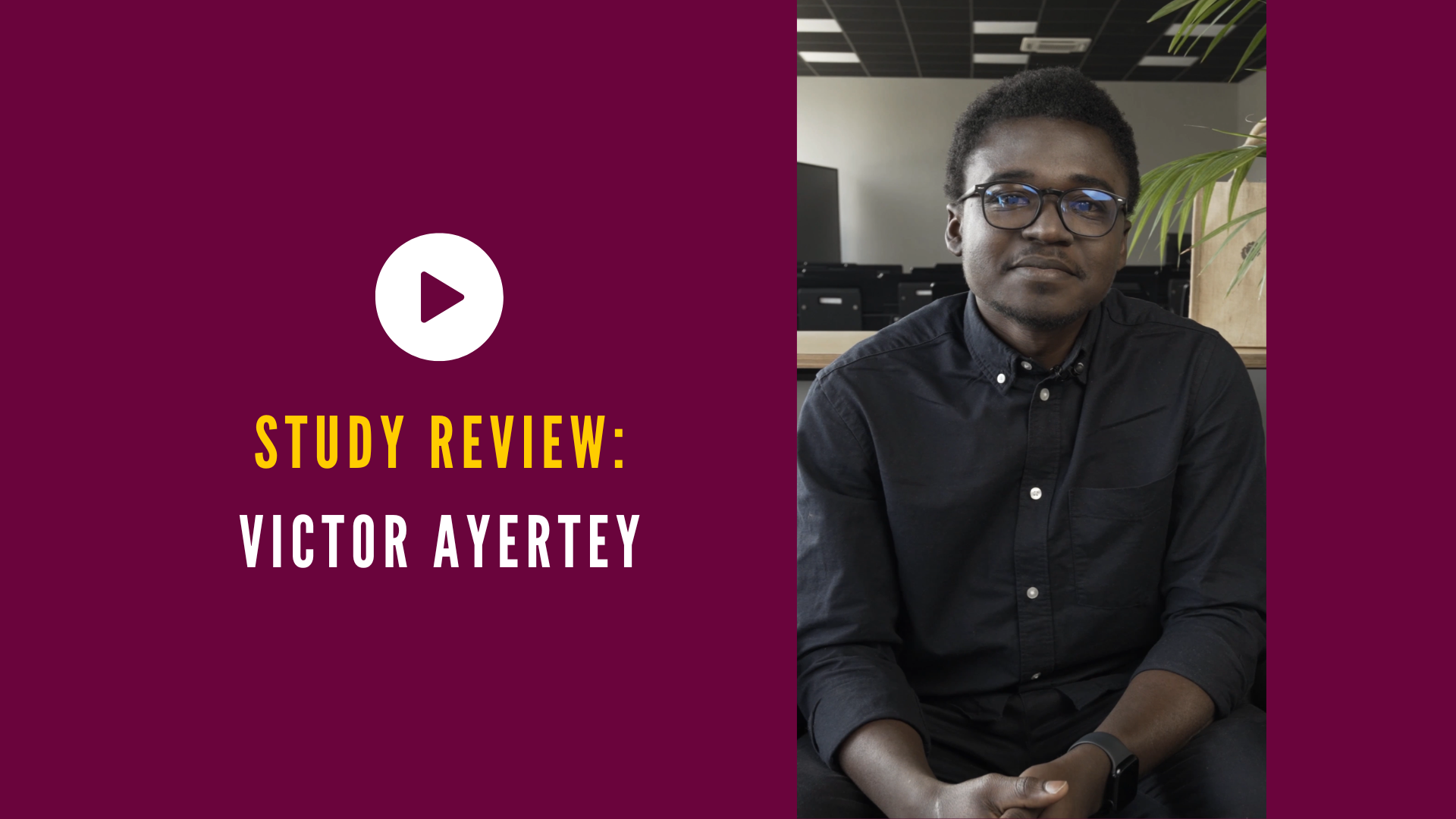
Meet Vilnius University Business School’s community:
Ability to initiate change and operate in conditions of uncertainty;
Ability to identify new opportunities and solve challenges effectively;
Resilience in a dynamic business environment;
Understanding and application of social responsibility and sustainability principles.
Analytical and Critical Thinking:
Ability to make data-driven decisions;
Competencies in strategy development and implementation;
Ability to apply artificial intelligence (AI) and other technological solutions.
Effective Collaboration:
Public speaking and presenting ideas;
Strengthening negotiation skills;
Ability to work in diverse teams and in an international context.
Your opportunities during studies:
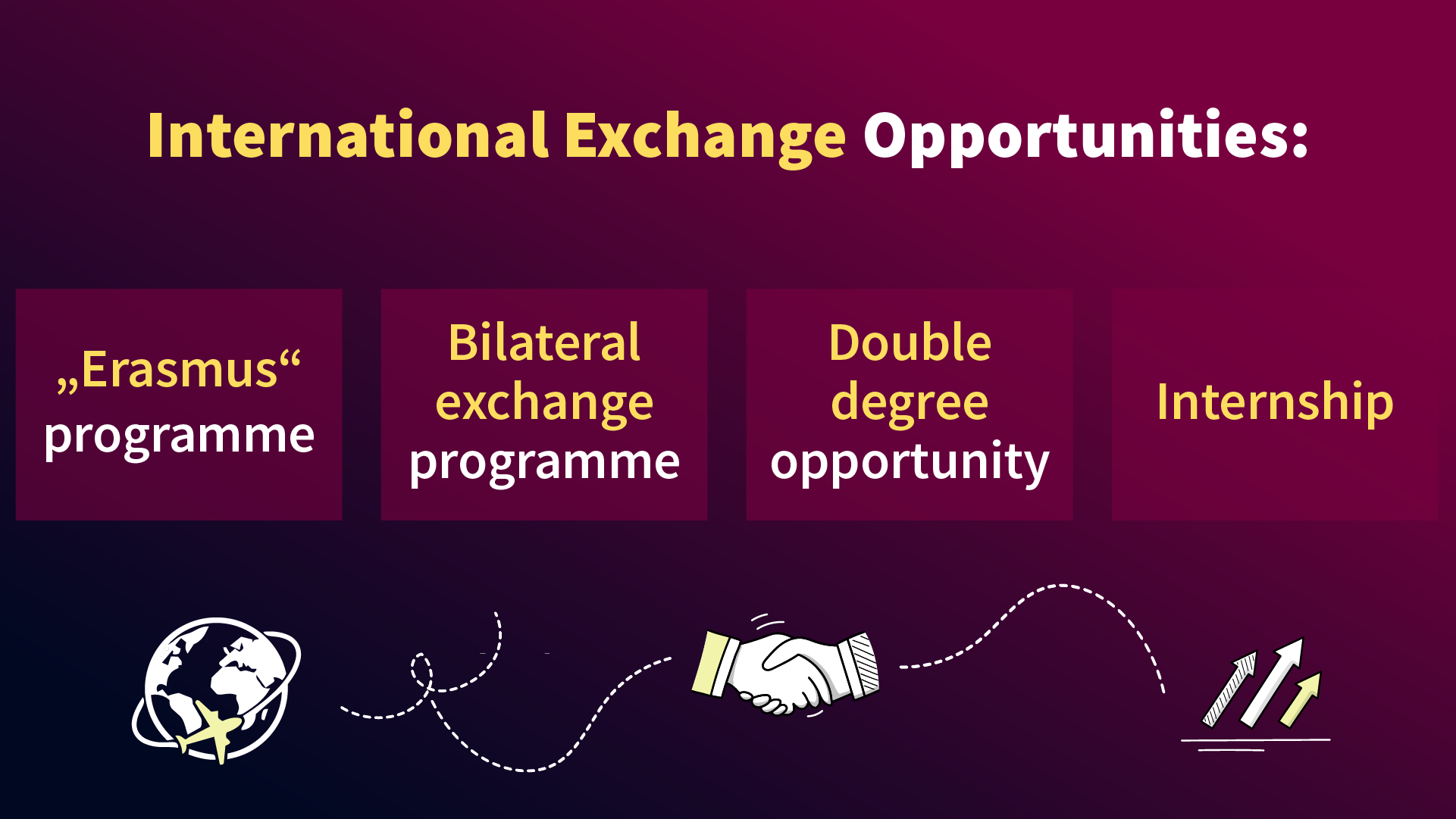
Erasmus programme. 1 semester / 1 year of studies abroad;
Bilateral exchange programme. 1 semester / 1 year of studies abroad;
Double degree. Studies at our partner universities;
Internship. In Lithuania or abroad to gain practical skills.
The other choices also depend on you — learn foreignlanguages, do volunteer work, or actively get involved in the Student Representation, sports, artistic, or social activities. There are truly many opportunities and choices! Learn more about the opportunities here.
Study program
Logic of the International Business study program
The modular International Business program is designed to provide students with the knowledge, skills, and competencies they need to establish, develop, and expand a business under uncertainty through a step-by-step approach.
Key strengths of this study program include:
Entrepreneurship based learning - a focus on developing entrepreneurial mindset and skills, necessary for creating and leading own business.
A modular structure that allows for flexibility and customization of the learning experience.
Challenge-based learning (CBL), which allows students to apply the concepts and skills they have learned in a practical and relevant context.
A focus on sustainable entrepreneurship, which helps students understand the importance of social and environmental responsibility in the business world.
The opportunity for personalization of study through the ability to choose elective courses and tailor the program to individual interests and goals.
One of the unique features of this program is the incorporation of challenge-based in the core business creation modules each semester. These modules include entrepreneurship management, sustainable economics, entrepreneurship research, entrepreneurship, and project and business process management. This approach allows students to apply the concepts and skills they have learned in a practical and relevant context, helping them to better understand and retain the study material.
CBL Advantages:
Challenge-based learning helps students develop critical thinking skills. By working on real-world problems, students must analyze and evaluate information, identify and define problems, and develop creative solutions.
Challenge-based learning promotes collaboration and teamwork. In problem-based learning, students often work in small groups to brainstorm and develop solutions to problems. This helps them learn to communicate effectively with others, share ideas, and work towards a common goal.
Challenge-based learning encourages self-directed learning. In problem-based learning, students are often given a problem to solve and must take the initiative to research and learn the necessary information to come up with a solution. This helps students develop independence and self-motivation.
Challenge-based learning allows for the application of knowledge. Problem-based learning allows students to apply what they have learned in a practical, hands-on way, helping them to better understand and retain the material.
The program provides a strong foundation for those interested in starting their own business or pursuing a career in business management and entrepreneurship.
Structure of the program:
In the first year, students are introduced to the fundamentals of entrepreneurship, the business environment, sustainable economics, business communication tools, entrepreneurship management, and mathematical methods for making business decisions.
In the second year, students study sales strategies, entrepreneurship marketing, entrepreneurship research, sustainable business development, business financing and entrepreneurship.
In the third year, students study Strategic Business Development and have the opportunity to choose five individual study modules from a list of available options. There are also opportunities for students to participate in the Erasmus+ mobility or Mobility Window programs or to enroll in a double degree program.
The studies are completed with a 3-month professional internship at a business enterprise and a final thesis, which is defended in front of a committee to demonstrate that the student has achieved the outcomes of the study program. Students complete their final thesis in the form of a business case research project.
Business Challenges
Business Challenges during your study process:
Business challenges are real-life problems or situations presented during the study process by companies, which students analyze and solve. Students work in teams and apply the theoretical knowledge they acquire to address relevant business issues. They use data-driven approaches and provide practical solutions for businesses. In this way, studies are based on the learning by doing principle and close collaboration with the business sector.
These business challenges are integrated into the study program as module projects and final thesis projects.
EXAMPLES:
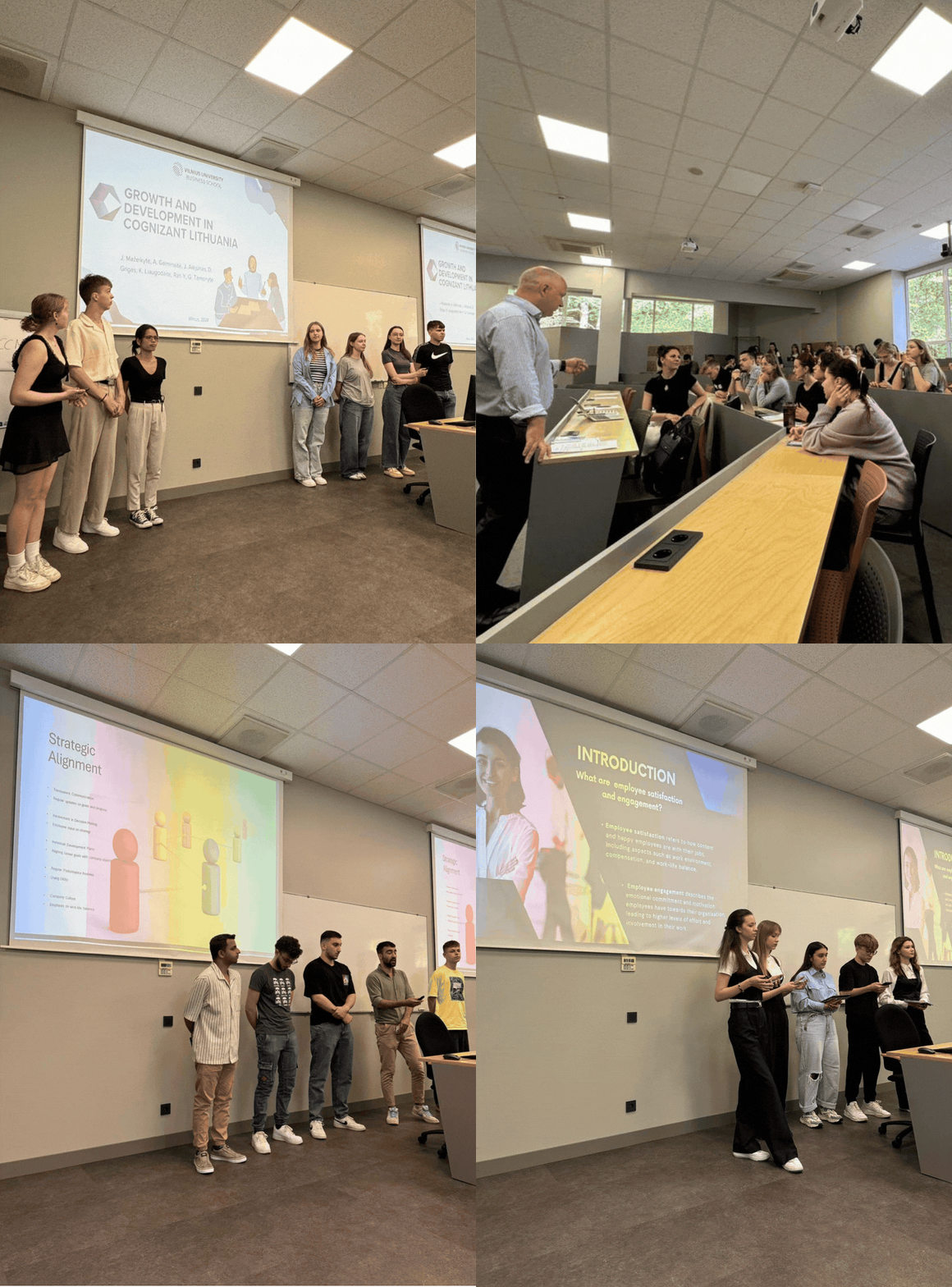
#1 Business Challenge: "Increasing Employee Satisfaction and Engagement at the "Cognizant" Center in Vilnius."
The challenge was presented by: Cognizant‘s Business Operations Managers Ieva Rukavičiūtė, Aušra Zubkienė, Marija Miselytė-Žilinskė.
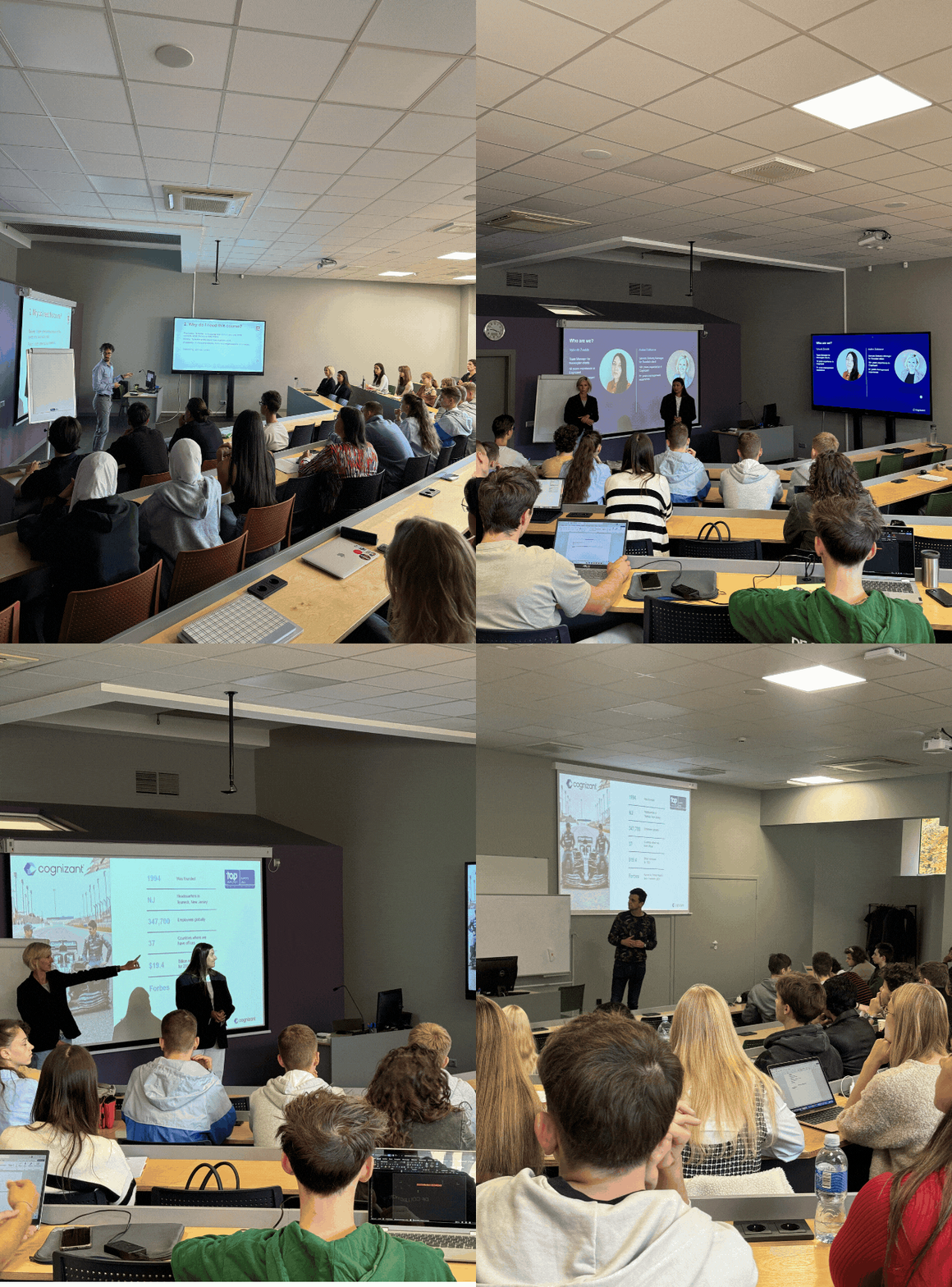
#2 Business Challenge: „Improving hybrid working model by suggesting sustainable alternatives“.
The challenge was presented by: „Cognizant‘s Business Operations Manager Aušra Zubkienė and Team Manager Vytautė Žvinklė.
#3 Business Challenge: "Evaluation of Opportunities for a New Product – Carbon Dioxide Certificate."
The challenge was presented by: UAB „Draudimo inovacijos“ Director Eugenijus Mažiulis.
Admission
Admission Requirements and Selection Criteriafor International Students
Matura (high school leaving) certificate.
For non-EU/EFTA applicants: the gap since your completed secondary degree should not exceed five years.
Candidates with at least 70% of the highest possible CGPA (cumulative grade point average) are eligible.
English language proficiency - the level not lower than B2 (following the Common European Framework of Reference for Languages (CEFR).
Candidates should pass recorded video interview. More details will be provided during the application.
Admission Requirements and Selection Criteriafor Lithuanian Students
Exams
Coefficient
Mathematics
0.4
Lithuanian Language and Literature
0.2
Exams and/or annual grades
History or Information Technology, or Geography, or a Foreign Language, or Economics and Entrepreneurship
Minimum requirements for admission to state-funded places, state-non-funded places with scholarship and state-non-funded study places
You need to have passed the following national exams:
- the Lithuanian language and literature state maturity exam in the general (B) or extended (A) course;
- the mathematics state maturity examination in the general (B) or extended (A) course;
- a maturity examination freely chosen by the applicant.
The arithmetic mean of the marks obtained in the three compulsory maturity examinations must not be less than the basic level of learning achievement of 50 points (calculated by adding the results of these examinations and dividing by 3).
Minimum requirements for admission to state-funded (SF), state non-funded with scholarship (SNF/ST), and state non-funded (SNF) study places
Applicants must have passed the following state maturity exams:
Lithuanian Language and Literature state exam at the general (B) or extended (A) level;
Mathematics state exam at the general (B) or extended (A) level;
One freely chosen state maturity exam.
The arithmetic average of the three required state exam results must be no lower than the basic learning achievement level – 50 points (the score is calculated by summing the three exam results and dividing by 3).
For persons who obtained their secondary education in 2025 and 2026, the minimum competitive score is 4. For persons who obtained their secondary education before 2025, the minimum competitive score is 5.
Own-funded study place for EU/EFTA countries and Ukraine*
1975 Eur
Own-funded study place for non-EU/EFTA countries*
2175 Eur
* The standard tuition fee (1625 Eur) applies to students who complete their first autumn semester with a GPA of at least 95%. Academic performance is reviewed individually each semester.
During the studies students may apply for VU Business School scholarship, social, incentive scholarships, one-off social grants and other.More information (LT).More information (EN).
Students who finish a semester at VU BS with a perfect GPA (10.0) are granted 1000 EUR scholarship for the top-tier results. This scholarship can be earned every semester – excellence is rewarded continuously.
Be among the TOP 10 STUDENTS in your program (based on admission score or GPA for international students) and study for the regular tuition fee. Both Lithuanian and international applicants compete in the same ranking.
Academic Counceling
At VU Business School we pay a lot of attention to students' academic counseling. If you have any questions during your studies, you can contact your study coordinator to solve any problem or just to talk.
During the studies, all relevant information will be delivered by the study coordinator.
Please meet the study coordinator for this study program:
Aistė Prialgauskaitė
tel. +370 660 93 060
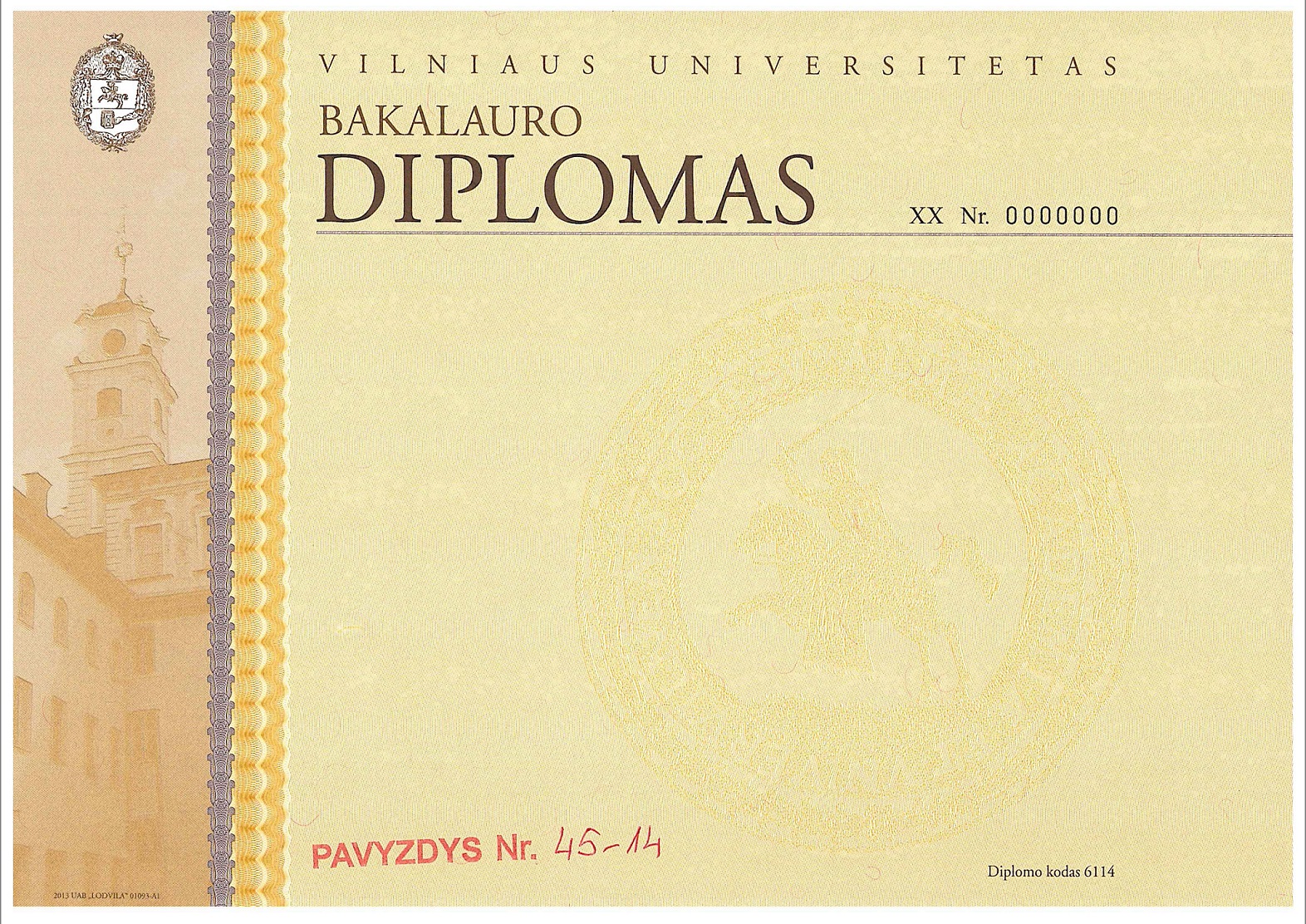
Diploma
University studies shall be completed when all requirements of the chosen full-time study program are fulfilled. Graduates of University study shall receive a diploma certifying hereof.
If students fulfill the first and second cycle full-time study programs with especially high results, they are issued a special CUM LAUDE diploma.
Diploma Supplement which identifies study subjects, their content, and results, is issued together with the diploma. Diploma Supplement is a document that complies with the model agreed by the European Commission, the Council of Europe and UNESCO/CEPES; it supplements a higher education, Master or Bachelor diploma with the data required for international academic and professional recognition, provides a description of the nature and contents of the studies completed by its holder and gives details on the national higher education system.
Diploma Supplement is produced in Lithuanian and English and is issued to all graduates since 2006 automatically and free of charge as an integral part of the diploma.
Committee
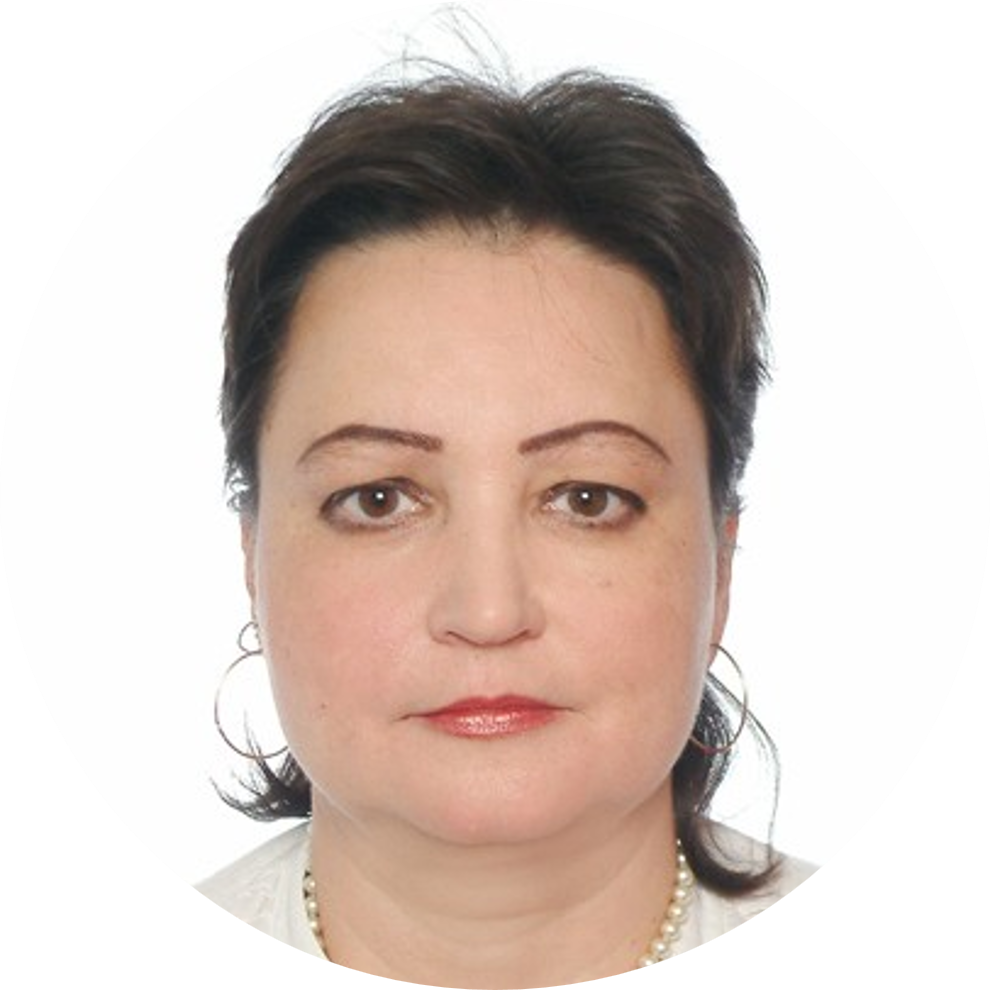
The Study Program Committee is a collegiate governing body responsible for ensuring and continuously improving the quality of the study program.
The Committee monitors the relevance and currency of the program's content, analyses academic outcomes and student achievements, and initiates program updates in response to labour market developments and feedback from academic staff, students, and social partners.
The Committee includes student representatives and external partners from the business and public sectors, ensuring a broader perspective on program quality:
Assoc. Prof. dr. Danguolė Oželienė
Chairman of the committee
Lecturer Laura Hamidova Lecturer
Lina Žirnelė
Lecturer
associate professor dr. Dileta Jatautaitė
Petras Dubinskas
Associate professor of Partnership
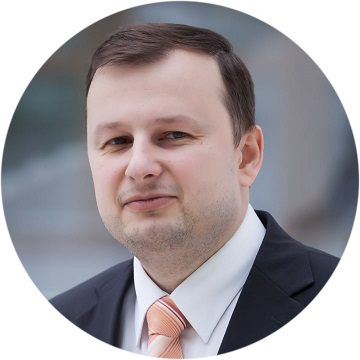
Vytautas Jakelaitis
Representative of social partners
Head of Sales and Business Development at Vilniaus šilumos tinklai
Representative of students (2)
Career
ALUMNI I Viktorija Kundrotaitė: The Result of Business Studies – Managing a Horse Ranch
ALUMNI I Antanas Bernatonis, who Founded Lithuania’s First AI Agency
ALUMNI I Deividas Tokaris: From an International Business Bachelor’s Degree to an Agency Generating Million-Euro Sales
ALUMNI I Linas Marcišauskas: Business Studies for Content Creators
ALUMNI I Julija Jeršova: From an International Business student to an AirBaltic pilot
ALUMNI I Rapolas Sausaitis. Entrepreneurial Thinking That Inspired the Trendy Bar Business
ALUMNI I Romanas Lipovič. From Business Studies to Building Own Business – Wantly.
























 +370 612 46 044