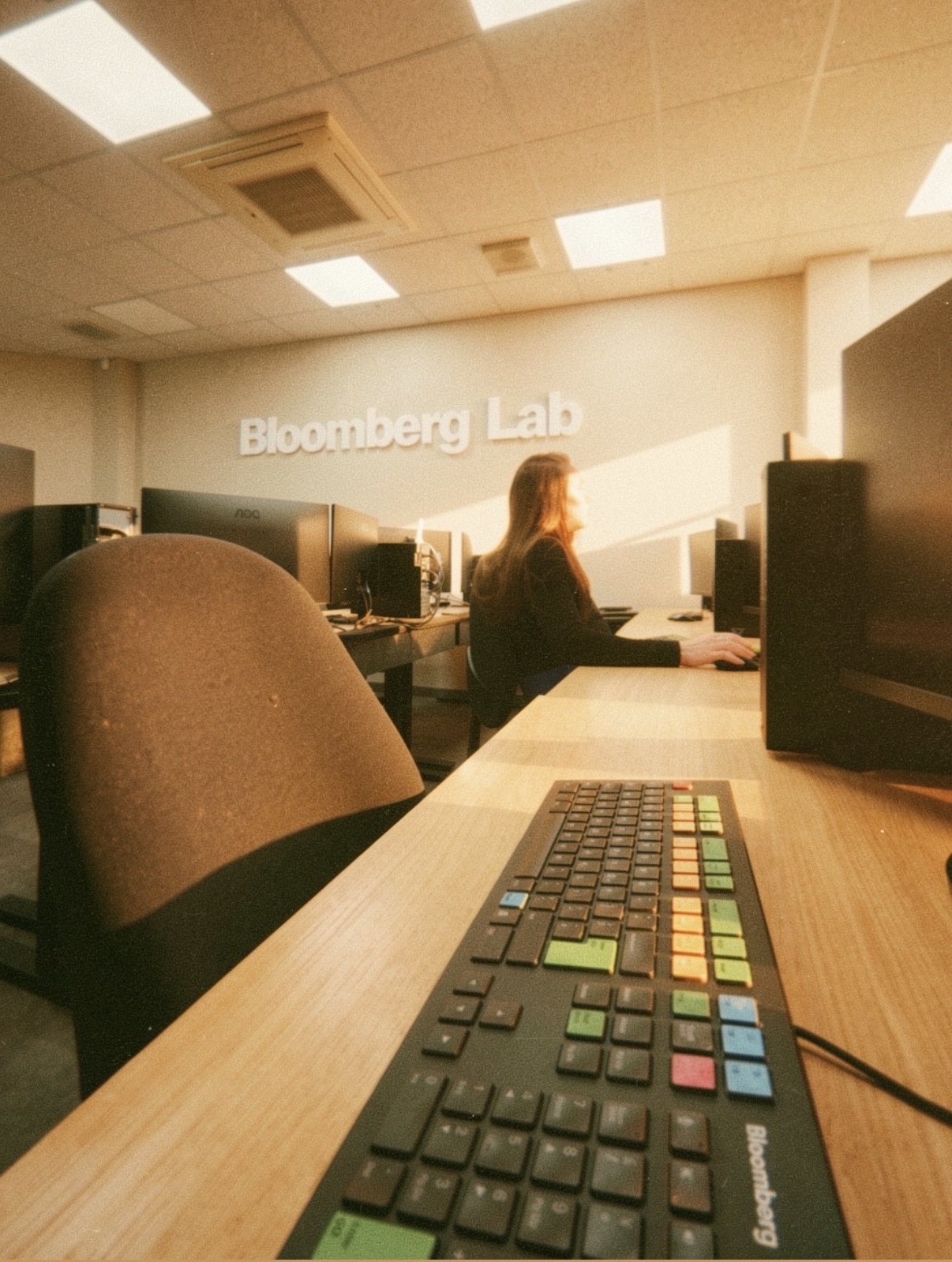
The Business and Finance Bachelor's study program is exceptional as students have access to Bloomberg terminals, which provide opportunities to work with real financial market data and professional analytics tools. The program develops modern business and financial market experts who are capable of making data-driven decisions in an international business environment.
Internationally Accredited Study Quality. We are among the TOP 2% of business schools worldwide. The quality of studies at the Vilnius University Business School is recognized by prestigious international accreditations: AMBA (UK) and ACBSP (USA).
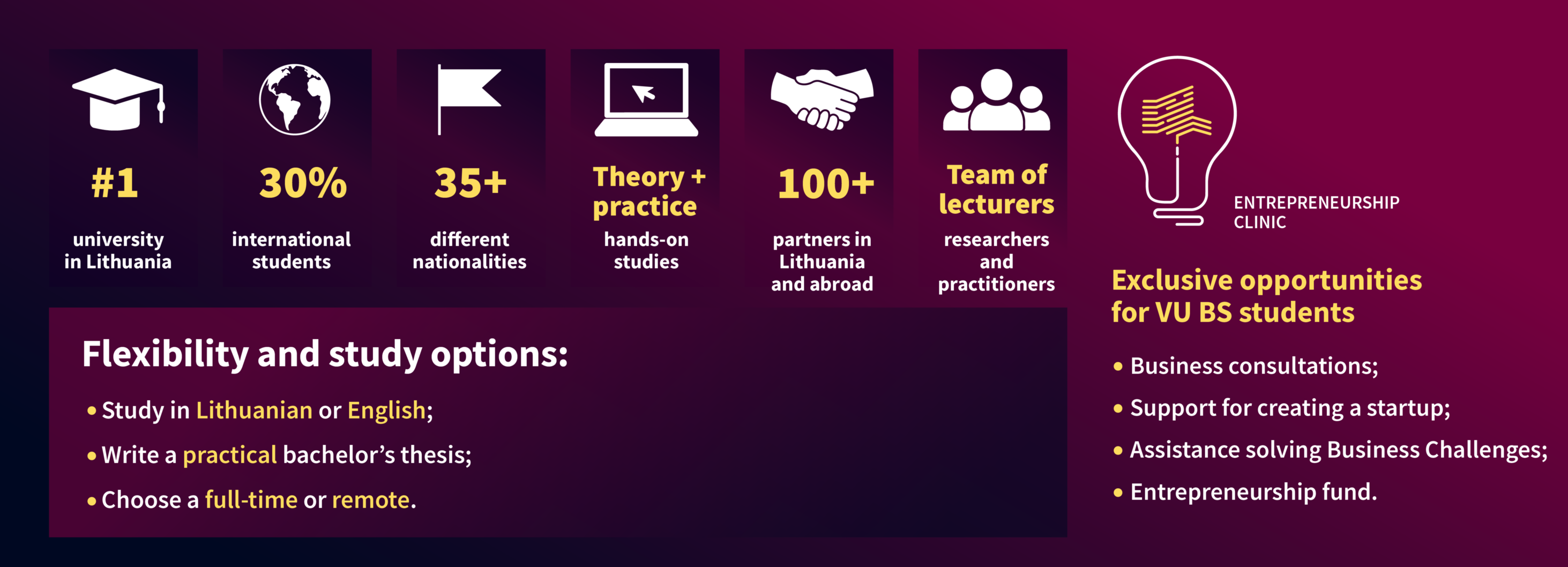
Theory + Practice. The theoretical knowledge acquired during the studies is immediately applied in practice. One of the program’s unique features is real business challenges presented to students by Vilnius University Business School’s partners (companies). Working in teams throughout their studies, students will solve business challenges and pitch their solutions to business representatives every semester.
International Community. The Business School is one of the most global faculties at Vilnius University. More than 30% of our students are international, and our global partner network spans the world.
Learn more about business challenges:
Meet Vilnius University Business School’s community:
Financial data interpretation and analytical thinking skills for strategic decision-making;
Ability to evaluate investment opportunities, market trends, and financial risks;
Practical experience with professional financial analysis tools used in international organizations and financial institutions.
Strategic Business and Finance Management:
Understanding of the international business environment and global finance processes;
Competencies in financial planning, budgeting, and performance evaluation;
Ability to manage change and operate in a dynamic market environment.
Leadership and Entrepreneurial Mindset:
Ability to communicate effectively and work in teams to solve complex business challenges;
Critical thinking and the ability to respond quickly to market changes;
Application of professional ethics, responsibility, and sustainability principles in business and finance.
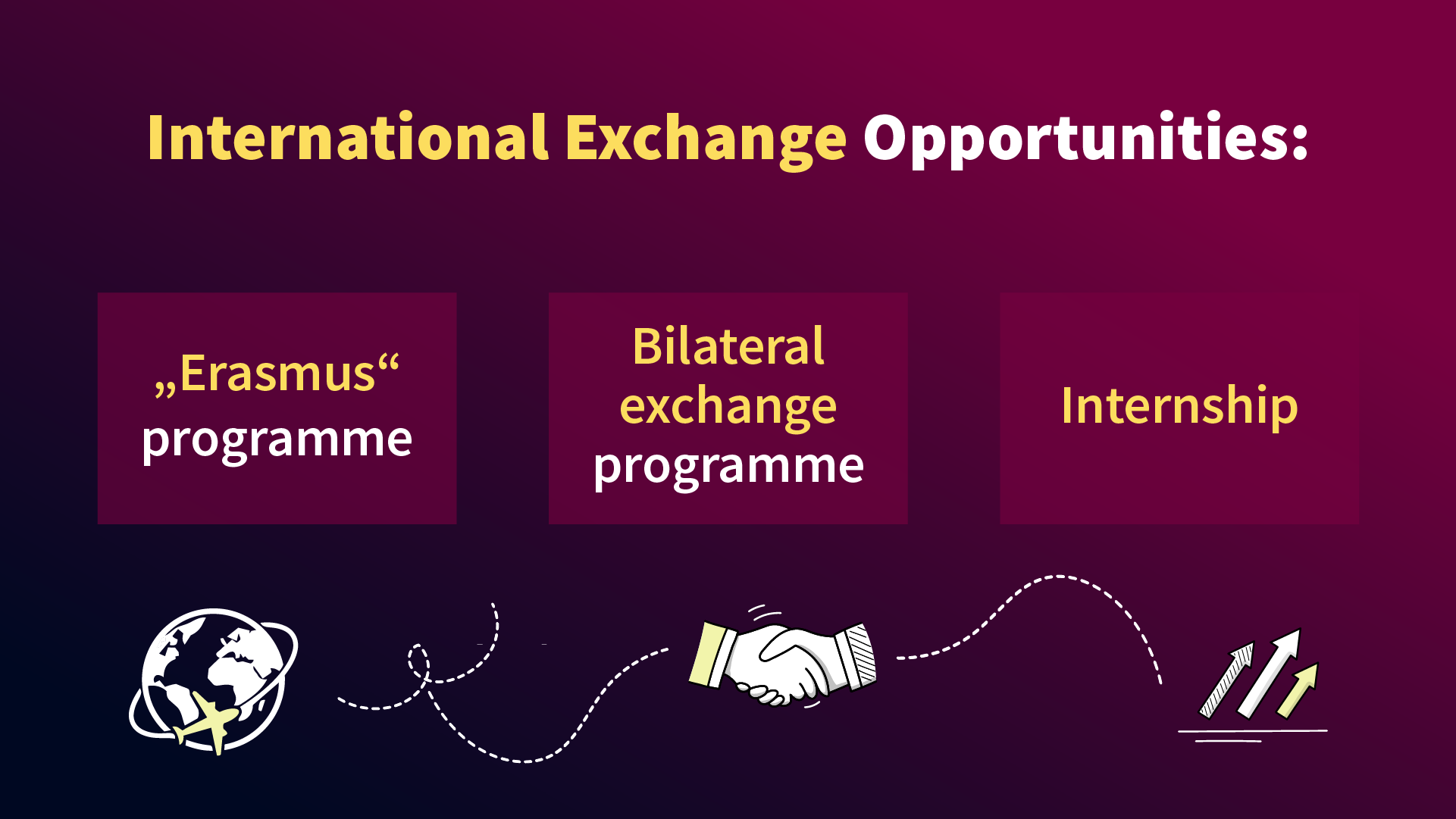
Your opportunities during studies:
Erasmus programme. 1 semester of studies abroad;
Bilateral exchange programme. 1 semester of studies abroad;
Internship. In Lithuania or abroad to gain practical skills.
The other choices also depend on you — learn foreign languages, do volunteer work, or actively get involved in the Student Representation, sports, artistic, or social activities. There are truly many opportunities and choices! Learn more about the opportunities here.
Study Program
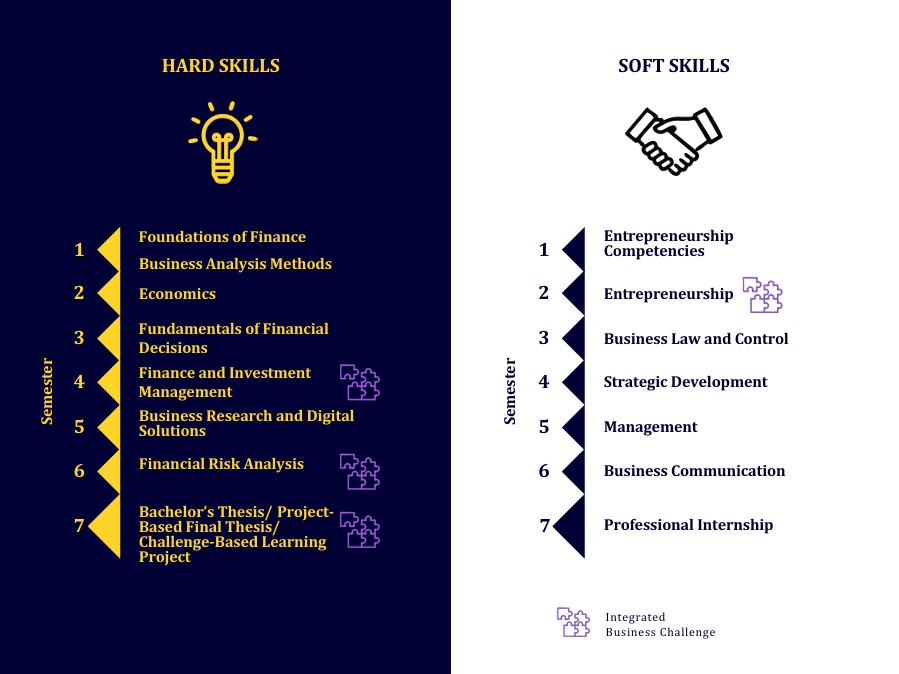
“Hard” and “Soft” Programme Content
The hard-type content (hard skills and knowledge) includes modules that provide fundamental, scientifically grounded knowledge and clearly defined competencies required for creating, managing, developing, and expanding a business. These competencies are directed toward the purposeful, rational, and evidence-based application of kno wledge when solving business-related challenges. While studying this type of content, students are prepared for specific tasks and roles that demand precise knowledge and analytical thinking.
The soft-type content (soft skills and knowledge) covers interpersonal, communication, creative, and emotionally intelligent capacities. These are competencies that often do not have one correct answer and are developed through practice, reflection, and behavioural experience. While studying modules of this type, students strengthen their ability to work in a team, communicate with different stakeholders, adapt to change, resolve conflicts, and lead effectively.
Why Is Balance Important?
By combining hard and soft content into a unified study programme:
comprehensive, holistic competences are developed – students not only know what to do but also how to do it effectively with others;
graduates become more competitive in the labour market, as they can analyse data, collaborate in teams, and present ideas clearly to an audience;
students are better prepared for today’s dynamic work environment, where theoretical knowledge and human-centred skills work together – especially in leadership, consulting, or start-up contexts.
*The study subjects may be changed by the decision of the Study Programme Committee.
Business Challenges
Business Challenges during your study process:
Business challenges are real-life problems or situations presented during the study process by companies, which students analyze and solve. Students work in teams and apply the theoretical knowledge they acquire to address relevant business issues. They use data-driven approaches and provide practical solutions for businesses. In this way, studies are based on the learning by doing principle and close collaboration with the business sector.
These business challenges are integrated into the study program as module projects and final thesis projects.
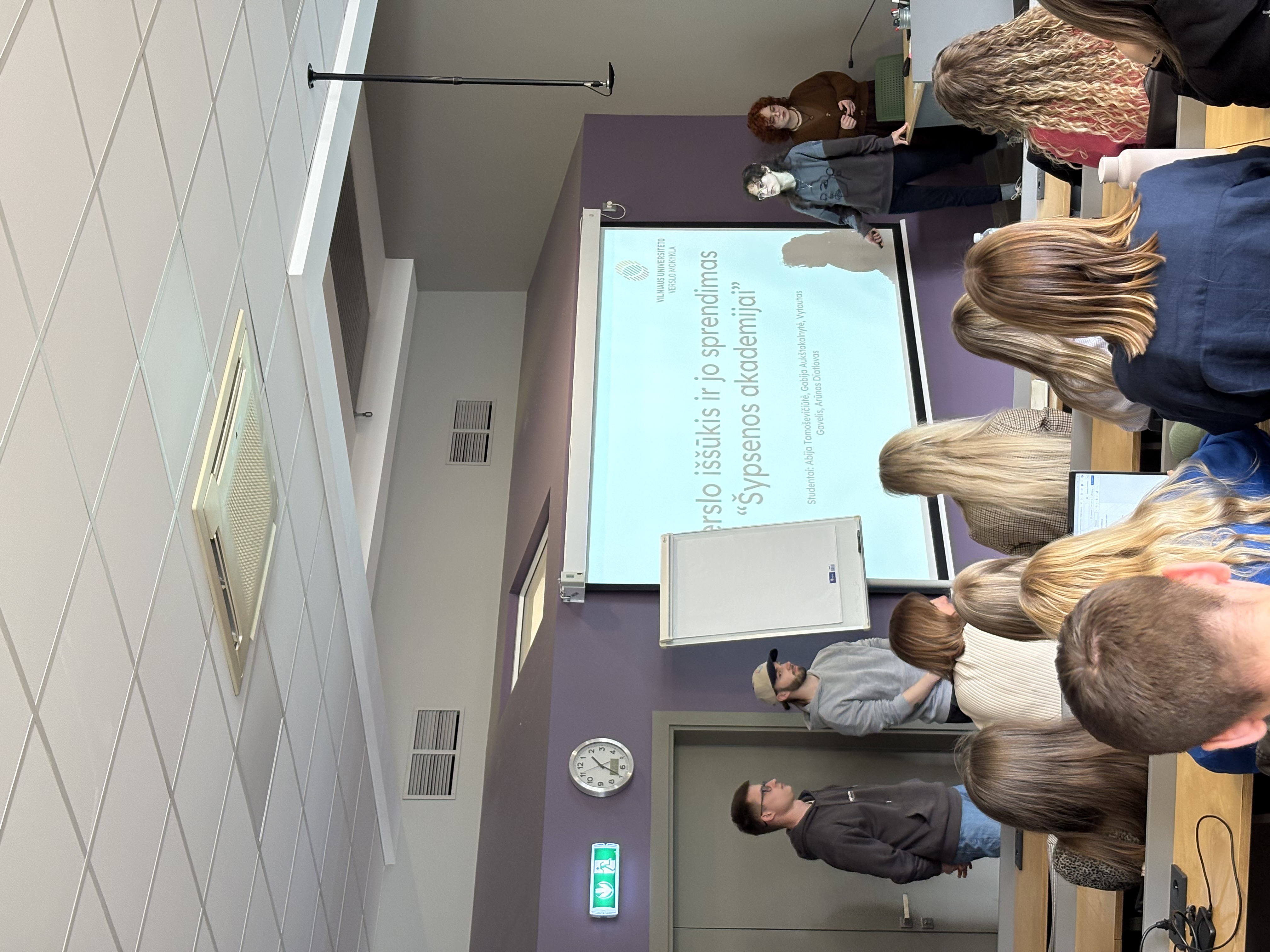
EXAMPLES: Business Challenge: How to escape a destructive price war without losing customer flow? The challenge was presented by: Dental clinic “Šypsenos akademija” *The company awarded the student team that proposed the best solution to the business challenge.
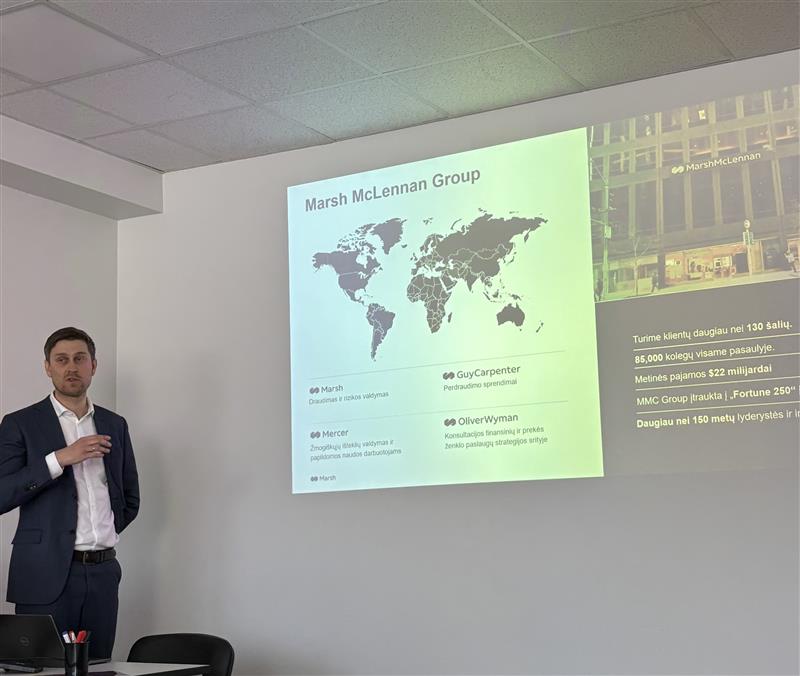
Business Challenge: A company providing short-term rental services for electric scooters and cars is planning expansion into Eastern Europe. Students were tasked with preparing a comprehensive strategic plan addressing expansion risks, operational organization, insurance and risk management, and fleet management.
The challenge was presented by: “Marsh McLennan Lietuva”
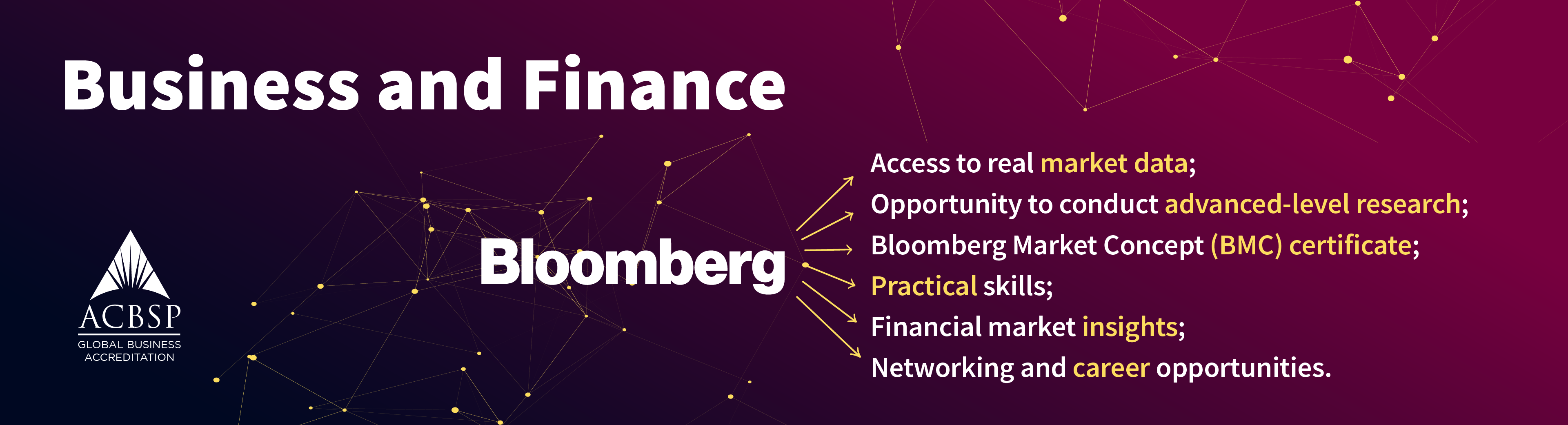
Bloomberg
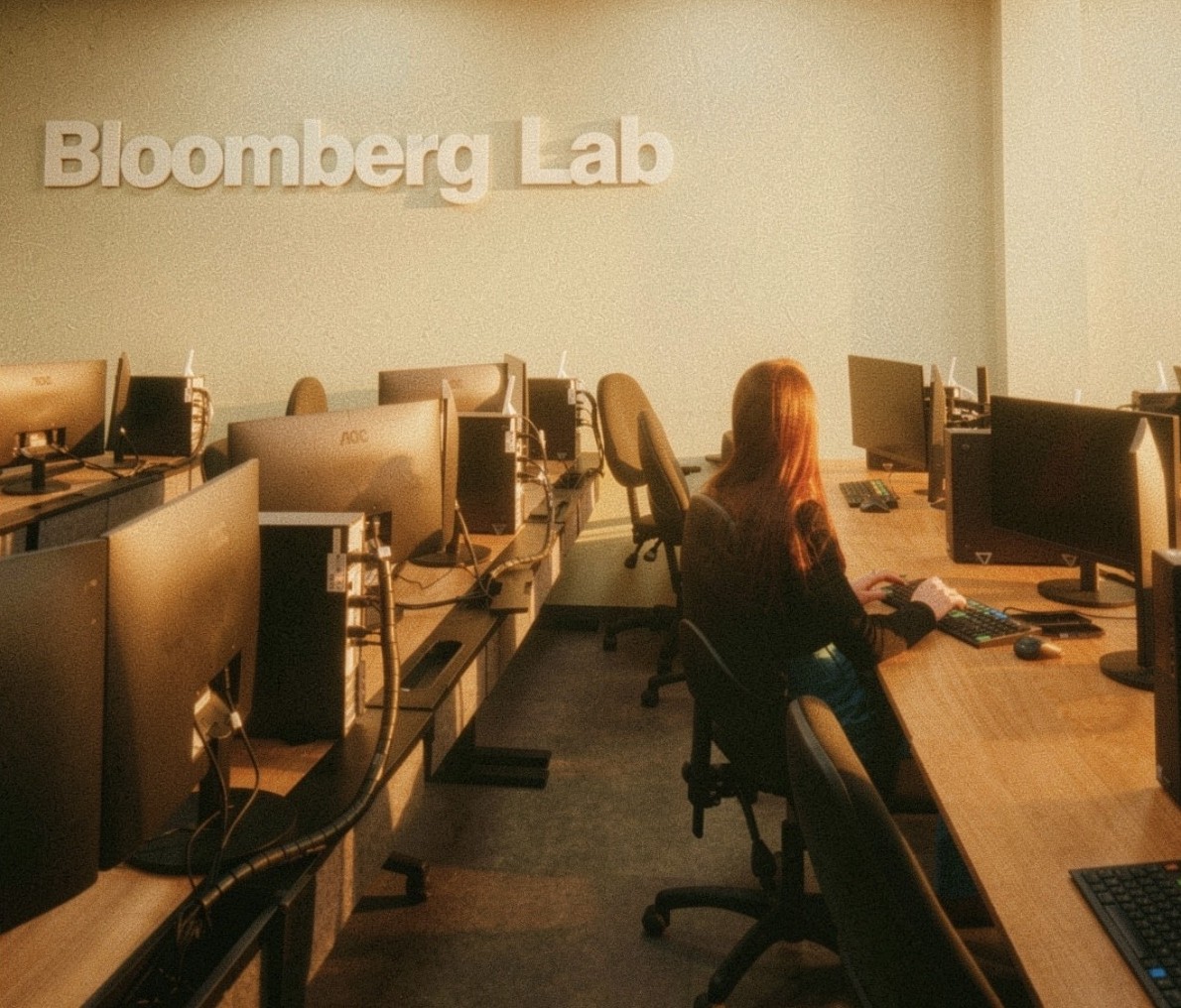
Bloomberg terminal. Benefits for students:
Access to real-time market data and professional market forecasts;
Practical skills development through learning to evaluate financial processes and understand the relationship between global events and market movements;
Opportunities to conduct advanced research and analysis while contributing to the evaluation and improvement of economic processes;
Bloomberg Market Concepts (BMC) certification – an opportunity to independently obtain a Bloomberg certificate demonstrating practical financial analysis competencies;
Financial market insights. Real-time global news monitoring, cross-country comparisons, and critical thinking development;
Networking and career opportunities.
Admission
Admission Requirements and Selection Criteria for International Students
Matura (high school leaving) certificate.
For non-EU/EFTA applicants: the gap since your completed secondary degree should not exceed five years.
Candidates with at least 70% of the highest possible CGPA (cumulative grade point average) are eligible.
English language proficiency - the level not lower than B2 (following the Common European Framework of Reference for Languages (CEFR).
Candidates should pass recorded video interview. More details will be provided during the application.
Admission Requirements and Selection Criteria for Lithuanian Students
Exams
Form
Coeficient
Mathematics
Examination
0.4
History or Information Technology, or Geography, or a Foreign Language, or Economics and Entrepreneurship
Minimum requirements for admission to state-funded places, state-non-funded places with scholarship and state-non-funded study places
You need to have passed the following national exams:
- the Lithuanian language and literature state maturity exam in the general (B) or extended (A) course;
- the mathematics state maturity examination in the general (B) or extended (A) course;
- a maturity examination freely chosen by the applicant.
The arithmetic mean of the marks obtained in the three compulsory maturity examinations must not be less than the basic level of learning achievement of 50 points (calculated by adding the results of these examinations and dividing by 3).
Minimum requirements for admission to state-funded (SF), state non-funded with scholarship (SNF/ST), and state non-funded (SNF) study places
Applicants must have passed the following state maturity exams:
Lithuanian Language and Literature state exam at the general (B) or extended (A) level;
Mathematics state exam at the general (B) or extended (A) level;
One freely chosen state maturity exam.
The arithmetic average of the three required state exam results must be no lower than the basic learning achievement level – 50 points (the score is calculated by summing the three exam results and dividing by 3).
For persons who obtained their secondary education in 2025 and 2026, the minimum competitive score is 4. For persons who obtained their secondary education before 2025, the minimum competitive score is 5.
Own-funded study place for EU/EFTA countries and Ukraine*
1975 Eur
Own-funded study place for non-EU/EFTA countries*
2175 Eur
* The standard tuition fee (1625 Eur) applies to students who complete their first autumn semester with a GPA of at least 95%. Academic performance is reviewed individually each semester.
During the studies students may apply for VU Business School scholarship, social, incentive scholarships, one-off social grants and other. More information(LT). More information(EN).
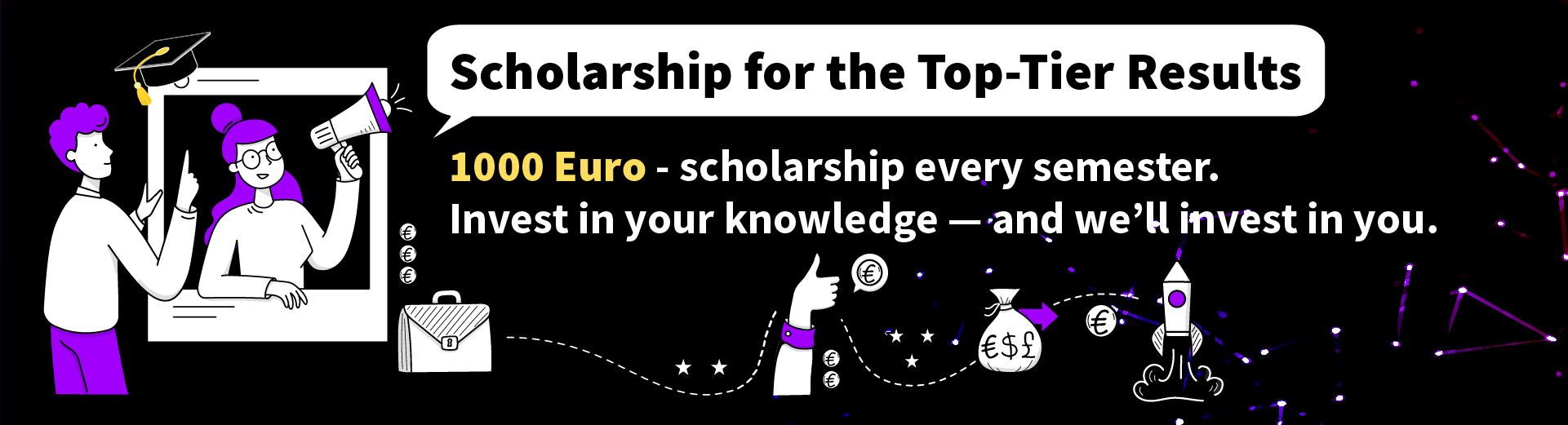
Students who finish a semester at VU BS with a perfect GPA (10.0) are granted 1000 EUR scholarship for top-tier results. This scholarship can be earned every semester – excellence is rewarded continuously.
Be among the TOP 10 STUDENTS in your program (based on admission score or GPA for international students) and study for the regular tuition fee. Both Lithuanian and international applicants compete in the same ranking.
Diploma
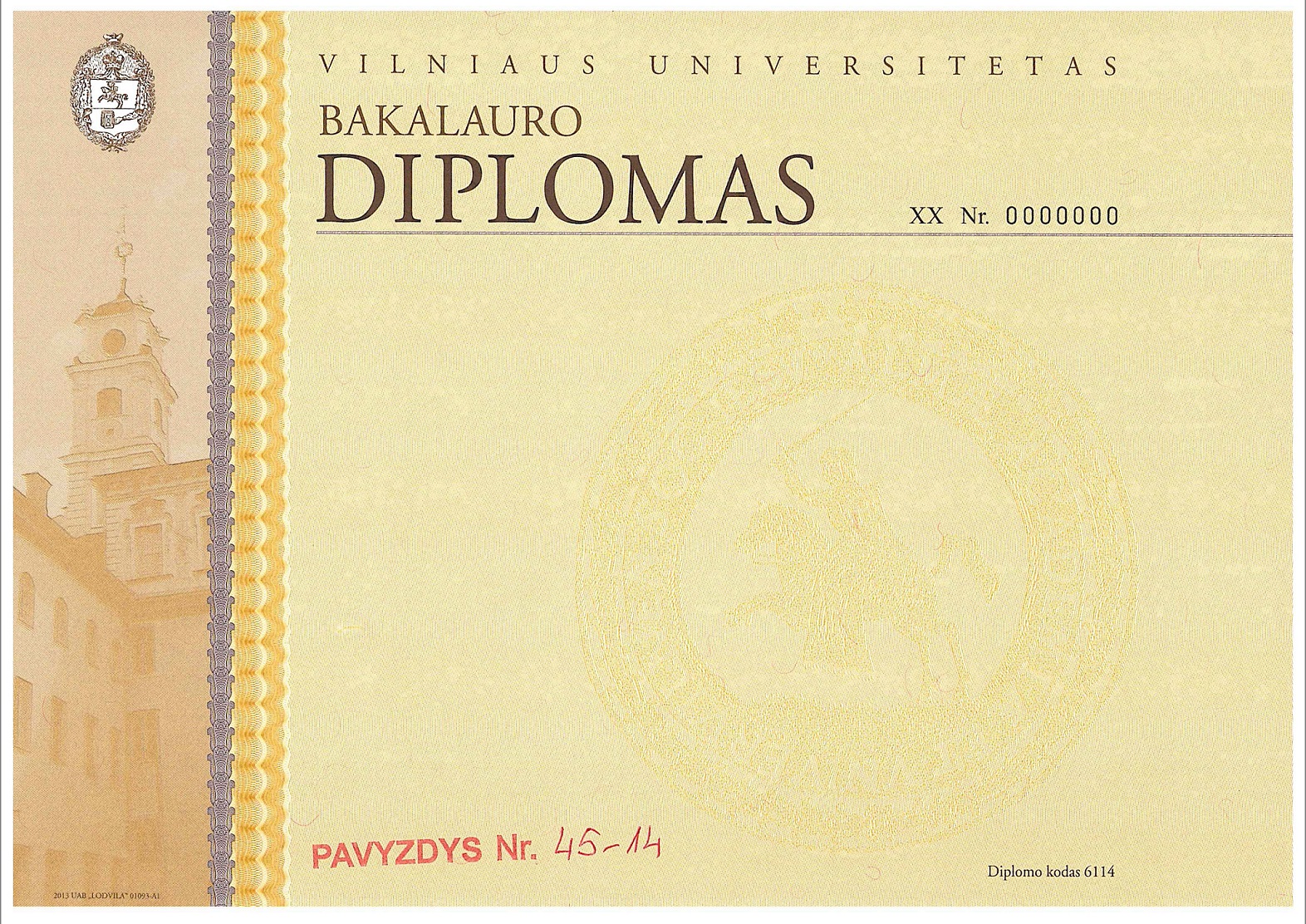
Studies at the University are completed by fulfilling all the requirements of the chosen study programme. Graduates are awarded a diploma.
If students complete the first and second cycle study programmes with excellent results, they are awarded a CUM LAUDE diploma.
Together with the diploma, a Diploma Supplement is issued, indicating the subjects studied, their scope, and evaluations. The Diploma Supplement – a document developed according to the model created by the European Commission, the Council of Europe, and UNESCO/CEPES – complements the higher education Bachelor’s or Master’s diploma for international academic and professional recognition. It describes the nature, level, content, and status of the studies completed, as well as the higher education system of the country.
The Diploma Supplement is issued in Lithuanian and English and has been provided automatically and free of charge to all graduates since 2006.
Comittee
Assoc. Prof. Dr. Julija Gavėnaitė-Sirvydienė
Chairperson
Assoc. Prof. Dr. Ieva Bužienė
Assist. Dr. Santautė Venslavienė
Lect. Eimantas Kamienas
Dr. Simona Survilaitė
Head of Global Compliance Research Representative of social partners
2 student representatives
Career
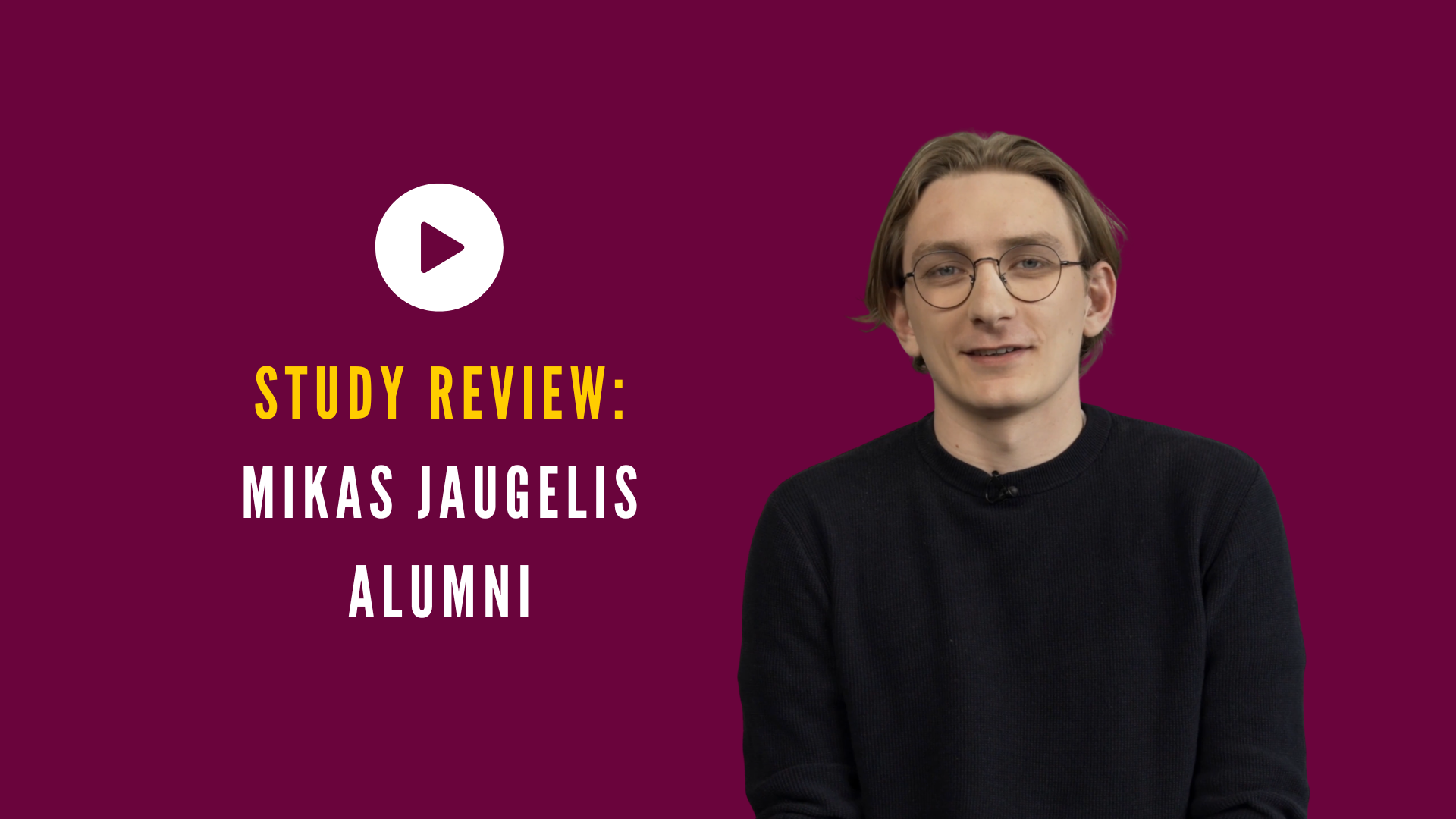
ALUMNII Rokas Bražinskas. Study Review and Exchange in Japan Experience
ALUMNI I Viktorija Kundrotaitė: The Result of Business Studies – Managing a Horse Ranch
ALUMNI I Antanas Bernatonis, who Founded Lithuania’s First AI Agency
ALUMNI I Deividas Tokaris: From an International Business Bachelor’s Degree to an Agency Generating Million-Euro Sales
ALUMNI I Linas Marcišauskas: Business Studies for Content Creators
ALUMNI I Julija Jeršova: From an International Business student to an AirBaltic pilot
ALUMNI I Rapolas Sausaitis. Entrepreneurial Thinking That Inspired the Trendy Bar Business
ALUMNI I Romanas Lipovič. From Business Studies to Building Own Business – Wantly.
Academic Counceling
At VU Business School we pay a lot of attention to students' academic counseling. If you have any questions during your studies, you can contact your study coordinator to solve any problem or just to talk.
During the studies, all relevant information will be delivered by the study coordinator.
Please meet the study coordinator for this study program:
























 +370 612 46 044