

 |
 |
 |
||||
 |
 |
 |
|
Chaos is just a million opportunities to make an order. The future belongs to people who see chaos and fast changes not as obstacles, but rather as challenges. Sounds like you? International Project Management programme is your best choice. |

Study courses & Schedule
I Semester
| I SEMESTER | ||
| Mandatory Courses | Lecturer | |
|
Strategic Management (5 ECTS) Students will be able to demonstrate knowledge and comprehension in fundamental concepts and theories in strategic management, develop skills to apply this knowledge to strengthen competitive advantages of companies. They will be capable to make key strategic decisions, to provide performance optimization recommendations as well as identify success criteria which will be used in strategic monitoring. |
 |
|
| Partnership Assoc. Prof. Eglė Daunienė | ||
|
Project and Project Organization Operational Management (10 ECTS) Students will gain theoretical knowledge about the main operational project management models, roles, responsibilities and functions and be able to explain the goals and methods of project team development, the role of project leadership. Students will be able to apply operational project management skills, especially focusing on the following competences: Project design, Requirements and objectives, Scope, Time, Procurement, Risk and opportunity as well as analyse the lessons learned in project work. |
 |
|
| Partnership Assoc. Prof. Vytautas Pugačevskis | ||
|
Human Resource Management (5 ECTS) Students will gain theoretical knowledge about the concepts of project Human resources management, its key features, principles, development, key areas and their role in project management, will gain competence in Human resource management specific to PM, including Personal communication, Leadership, Teamwork. Students will demonstrate knowledge, comprehension of the role of Human Resources in building successfully working project teams and develop application of the following Key competence indicators: Choose communication styles and channels to meet the needs of the audience, situation and management level; Provide direction, coaching and mentoring to guide and improve the work of individuals and teams; Support, facilitate and review the development of the team and its members. |
 |
 |
| Partnership Assoc. Prof. Mantas Tvarijonavičius, PhD |
Partnership Assoc. Prof. Artūras Bučinskas | |
|
Project Financial Management (5 ECTS) Students will gain knowledge, comprehension and application of project finance competences, fundamentals of the capital investment management in projects, programmes and portfolios management, develop practical skills in financial management of capital investment that would facilitate abilities to plan, organise, analyse and assess a company‘s development and expansion projects. |
 |
|
| Prof. Jekaterina Kartašova, PhD |
||
|
Innovation and Change Management (5 ECTS) Students will gain knowledge, apprehension and be able to explain the various factors of innovation management and their interrelationship. As well they will gain knowledge on lateral thinking (compared to a patterned way of thinking), be able to draw on and explain best practice in Innovation Management from European and local scenes and will gain practical skills in identifying opportunities to maximize growth and profitability, developing an innovation management plan and implementing all parts of an innovation management plan. |
 |
|
| Prof. Oliver Mauroner, PhD |
||
|
Enterprise IT Solutions in Project Management (5 ECTS) The aim of this course is to provide knowledge and skills in enterprise information system (Microsoft Project Web Access) design and possible usage for enterprise project and portfolio management solutions. |
|
|
| Partnership Assoc. Prof. Vytautas Pugačevskis |
||
II Semester
| II SEMESTER | ||
| Mandatory Courses | ||
|
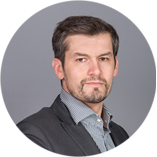
Process Management & Quality Management (5 ECTS) Students will be able to demonstrate knowledge, comprehension and application of the following Key competence indicators: Develop, monitor the implementation of, and revise a quality management plan for the project, Ensure quality throughout the project. As well as they will be able to demonstrate knowledge, comprehension and application at the advanced level of this KCI: Align with organisational vision and mission. |
 |
|
| Partnership Assoc. Prof. Artūras Kuliešas | ||
|
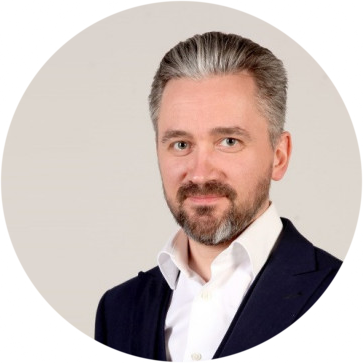
Strategic Project Portfolio Management (10 ECTS) The aim of this course is to develop Project Management knowledge and practice competences, with particular focus on competences in strategic project management as programmes and portfolios as well as social competencies in PM. |
 |
|
| Ivars Rungis, PhD |
||
|
Agile Project Management (5 ECTS) Students will gain theoretical knowledge and practical aspects about Agile Project Management principles, methods and tools and be able to explain and analyze Agile Project Management principles in projects, especially focusing on the following competences: Scope, Time, and Teamwork. Students will be able to demonstrate knowledge, comprehension and application of the following Key competence indicators using Agile approach: Structure the project scope; Define the work packages of the project; Establish and maintain scope configuration; Monitor progress against the schedule and make any necessary adjustments. |
 |
|
| Lect. Skirmantas Gricius | ||
|
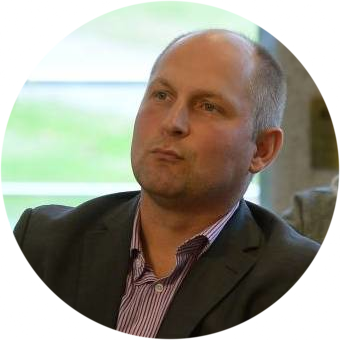
Leadership (10 ECTS) Students will gain theoretical and practical knowledge in project leadership. Skills of vision building, nurturing collaboration, promoting performance, cultivating learning and ensuring results for project success will be developed. Personal leadership motivation, sources of power, qualities, styles will be analysed. Team development and dynamics, effective communication and conflict management within the project teams will be discussed and explored. Leadership effectiveness criteria will be explained and applied to practical situations. |
 |
|
| Assoc. Prof. Andrius Valickas, PhD | ||
|
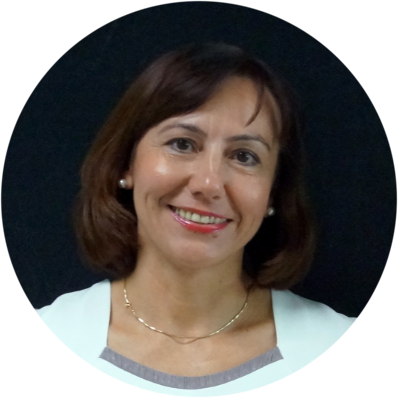
Research Methods (5 ECTS) The course introduces quantitative and qualitative research for the social sciences with emphasis on project management. It gives an overview of the main parts of scientific research, essential approaches to quantitative and qualitative data collection/generation and explores the basics of sampling, quantitative and qualitative data analysis. Significant part of the course consists of practical work allowing the students to gain a hand-on experience in developing of research proposal.
|
 |
|
| Assoc. Prof. Danguolė Oželienė, PhD |
||
Admission
| General admission requirements and selection criteria |
For all Lithuanian and EU applicants applying for a state-funded place |
For International applicants |
|
• Bachelor`s degree (university diploma) in Business and Management or in Management and Business Administration or Economics. • Bachelor`s degree (university diploma) or equivalent, and have at least 20 credits in business and / or economics. • Bachelor's degree or an equivalent university diploma in another field and have at least one years work experience related to the desired/intended study program. |
Structure of the competitive score
VS0,3 + D0,2 + P*0,5 VS – the average of diploma appendix (appendix) grades, except for graduation thesis and / or final exam (s). D - grade of the final thesis and / or final exam (average grade) or average grade of the final examination. P - motivation assessment. Applicants must complete the following motivation assessment form. |
• English language proficiency - the level not lower than B2 (following the Common European Framework of Reference for Languages (CEFR). - If your first language is English and/or if you have a university degree in English, you will be exempt from providing an English language test score. • If qualifications and motivation match the programme, the applicant will receive an invitation for an interview with the Admission Committee at Vilnius University Business School. |

Financing
| TYPE OF STUDY FINANCING FORM | TUITION FEE |
| State-funded study place | 0 Eur |
| Own funded study place for VU/VUIBS alumni/VU Erasmus | 2048 Eur/ per semester |
| Own funded study place | 2487,5 Eur/ per semester |
|
EESF* (ŠMPF- lith.) funded place |
439,5 Eur/per semester |
| SPECIAL STUDY PRICE OFFERINGS* during all application cycles |
|
2048 Eur / semester for:
*Each special study price application is considered individually. |
Diploma & IPMA certificate
VU Business school International Project Management Master's Degree Program has been recognised by the World's leading project management association IPMA!
It is stated, that our study program includes an extensive list of competencies defined in the International Competence Baseline published by IPMA. International Project Management master‘s program of Vilnius University Business School is the first recipient of IPMA REG registration in Lithuania and Baltic States!
Logics of the programme is based on International Project Management Association (IPMA) Individual Competence Baseline. IPMA certificates are widely recognized in the global project management community. 
University studies shall be completed when all requirements of the chosen full-time study programme are fulfilled. Graduates of University study shall receive a diploma certifying hereof.
If students fulfil the first and second cycle full-time study programmes with especially high results, they are issued a special CUM LAUDE diploma. If students fulfil the second cycle full-time study programme or the integrated study programme with especially high results and have distinct scientific competence, they are issued a special MAGNA CUM LAUDE diploma.
Diploma Supplement which identifies study subjects, their content and results, is issued together with diploma. Diploma Supplement is a document that complies with the model agreed by the European Commission, the Council of Europe and UNESCO/CEPES; it supplements a higher education, Master or Bachelor diploma with the data required for international academic and professional recognition, provides description of the nature and contents of the studies completed by its holder and gives details on the national higher education system.
Diploma Supplement is produced in Lithuanian and English and is issued to all graduates since 2006 automatically and free of charge as an integral part of diploma.





 Teams me