 |
 |
 |
||||
 |
 |
 |
|
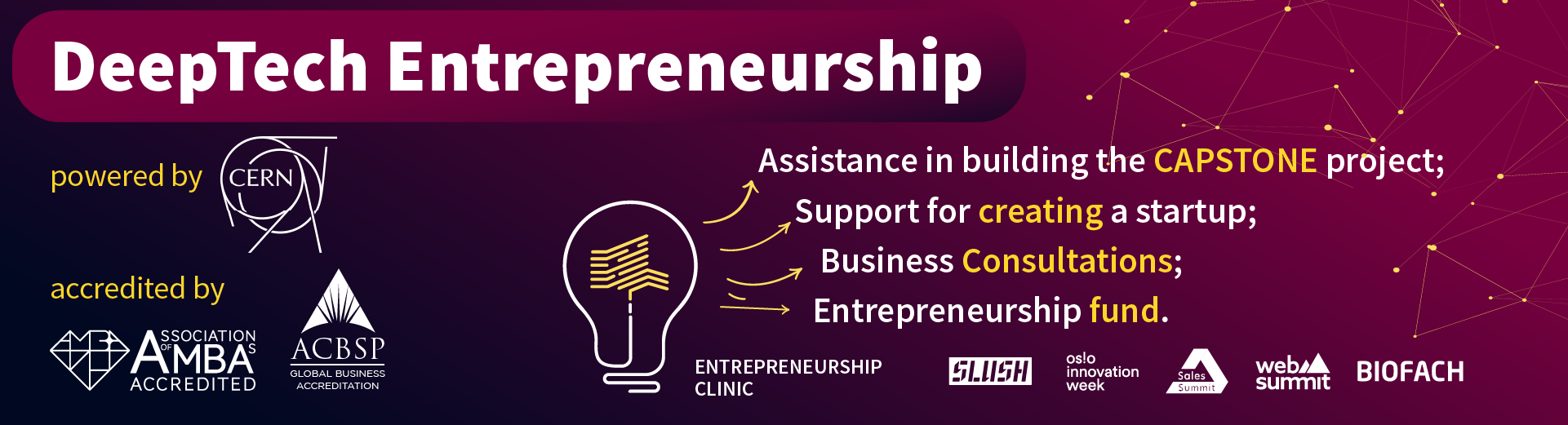
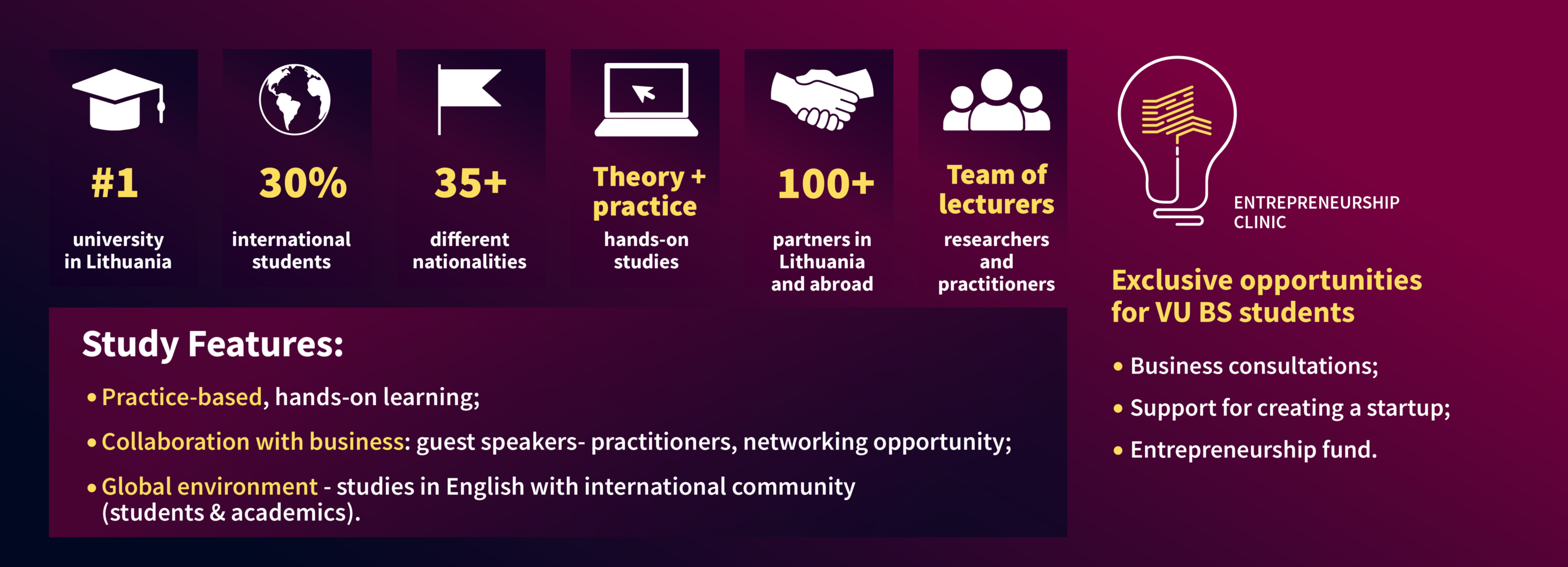
ABOUT THIS STUDY PROGRAM The DeepTech Entrepreneurship Master’s study program uniquely combines entrepreneurial thinking with deep-tech innovation development, empowering students to turn scientific and technological ideas into real business ventures. Internationally Accredited Study Quality. We are among the TOP 2% of business schools worldwide. The quality of studies at the Vilnius University Business School is recognized by prestigious international accreditations: AMBA (UK) and ACBSP (USA). Theory + Practice. The theoretical knowledge acquired during the studies is immediately applied in practice. One of the program’s unique features is a start-up capstone project that students may choose instead of writing a traditional thesis. Supported by mentors, industry professionals, entrepreneurs, and potential investors they work in multidisciplinary teams. Once in a Lifetime Study Visit. Students gaining exclusive insight into the global innovation ecosystem through a study visit to CERN in Geneve. International Community. The Business School is one of the most global faculties at Vilnius University. More than 30% of our students are international, and our global partner network spans the world. |
|
What makes DeepTech Entrepreneurship study program unique? Learn more about the Capstone Project – Billoka Success Story: |
| International Students | Lithuanian Students | |
 |
|
|
  |
|
- About Studies
- Study Program
- CERN Visit
- Admission
- Financing
- Academic counceling
- Diploma
- Committee
- Career
- Contact us
- About Studies
- Study Program
- CERN Visit
- Admission
- Financing
- Academic counceling
- Diploma
- Committee
- Career
- Contact us
About Studies
 |
|
 |
|
|
Entrepreneurial & Business Development Competencies:
Innovation & Technology Management Skills:
Leadership & Collaboration Competencies:
|
 |
Your opportunities during studies: |
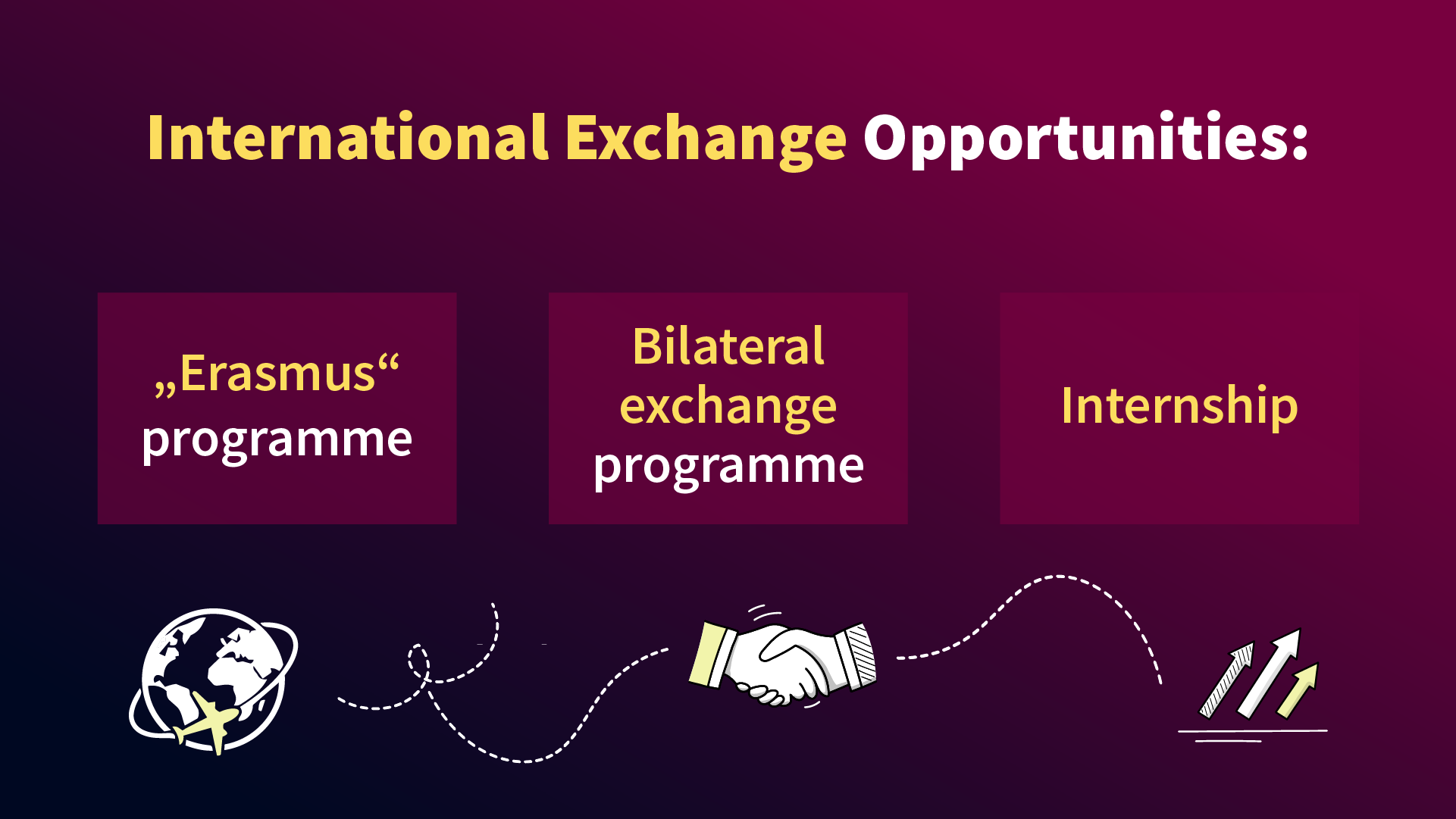
The other choices also depend on you — learn foreign languages, do volunteer work, or actively get involved in the Student Representation, sports, artistic, or social activities. There are truly many opportunities and choices! Learn more about the opportunities here. |
|
This program is designed and implemented together with: |
This study program is a member of:
Study Program
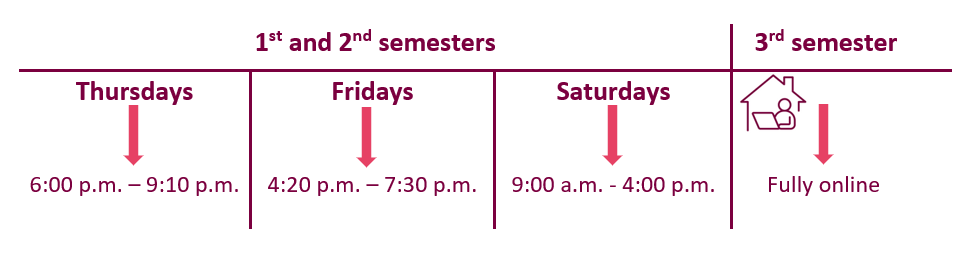
Lectures are organized in a full-time study mode. Classes are delivered in intensive modules, usually 2–3 work days per week (Thursday, Friday, Saturday). Visiting Professors’ lectures are held on Fridays from 9:00 am to 4:00 pm or from 3:00 pm to 8:00 pm.
I Semester
| I SEMESTER | |||||
| Compulsory Courses | Lecturers | ||||
|
Leadership and Strategic Management (10 ECTS) Students will be able to identify and measure DeepTech entrepreneurship conditions, relying on global, international, the EU’s, national, industry and micro level. They will understand various schools of thought regarding strategy formation and leadership and will be able to apply them; will be able to assess the suitability, feasibility, and acceptability of strategies in technology and innovation development contexts and be able to apply the information management and business intelligence techniques. Students will be capable to implement socially responsible, ethical/ moral, and sustainable DeepTech Strategy while assuring the quality and effectiveness. |
Lect. Jurgita Petrauskienė
|
Professor PhD. Mindaugas Laužikas
|
|||
|
Lecturer-Practitioner Marius Dubnikovas
|
|
Lecturer-Practitioner Laura Dabulytė
|
|||
|
Visiting Professor Sapna Advani
|
Visiting Lecturer Diogo Vieira da Silva Executive Director of the Entrepreneurship, Growth & Competitiveness Centre, Porto Business School |
||||
|
Design and Implementation of Engineering Products Development (10 ECTS) The purpose of this course is to introduce students to product development cycle: from ideation stage to product development design and its execution via new product development project, finally ending with business development leading to first sales with special emphasis on Lean-Start up process. Students will have to put knowledge gained in lectures straight away into practice by preparing a deep-tech product development proposal on a freely chosen topic. This proposal later may serve as a basis for a creation of a start-up, namely as an input for a business plan preparation, or for an implementation of a deep-tech product development project in already existing company. Thus, students shall be encouraged to choose a deep-tech product that is related to their career plans. |
Professor PhD. Brigita Abakevičienė
|
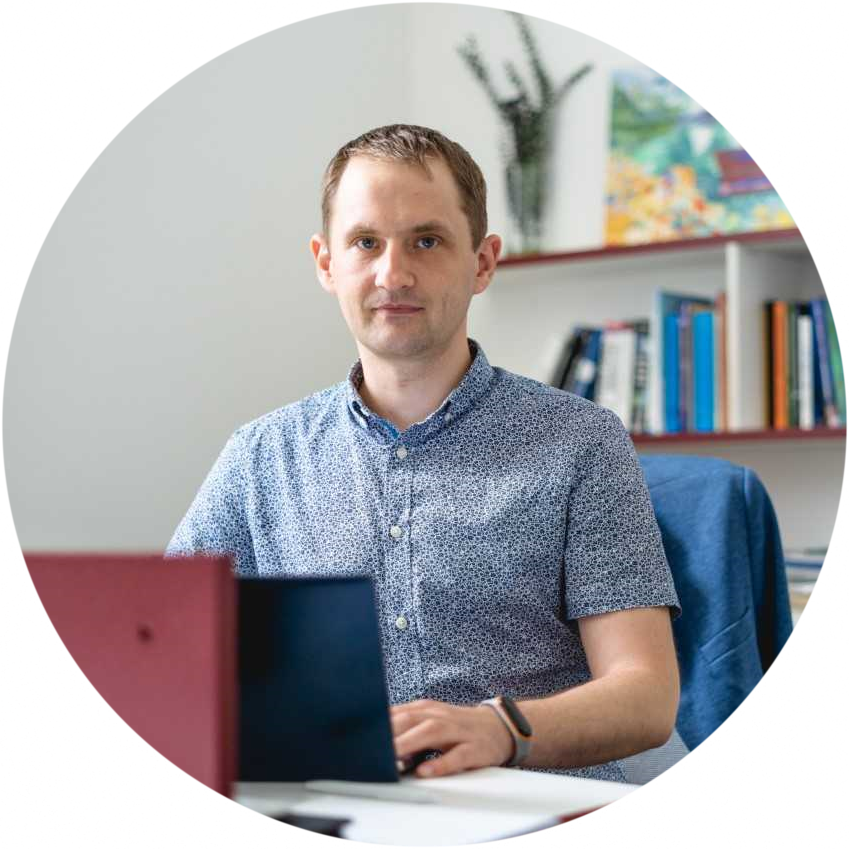
Associate Professor PhD. Pranciškus Vitta
|
|||
|
Professor PhD. Christoph Schäfer
|
Associate Professor PhD. Danguolė Oželienė
|
||||
|
Chief Researcher, PhD, Mobashar Mubarik
|
|||||
|
HighTech Market and Business Models (10 ECTS) This course is aimed at revealing the peculiarities of the development of High-Tech products and the specific features of companies and markets strategies in the realm of High-Tech. It provides an in-depth overview of the main approaches to High-Tech in business. An inclusive involvement of students is an important feature of the course, whereas the teaching will be based on real examples ranging from early-stage spin-off and startup companies to large-scale international frontier facilities with a special focus on CERN. |
|
|
|||
|
Professor PhD. Gintautas Tamulaitis
|
Professor PhD. Tadas Limba
|
||||
| Elective Courses | |||||
|
Practical statistics in R for Business Analytics (5 ECTS) Students will be able to apply knowledge in practice, think, analyse and systematize information in an abstract way. They will be able to select and adapt descriptive statistical methods to address the challenges arising from practical activities, to carry out studies, to critically assess the results and reliability of studies. |
|
||||
|
Associate Professor PhD. Dainius Dzindzalieta
|
|||||
|
Laser Technology (5 ECTS) During this course students will get acquintance with laser systems for materials processing, medicine, diagnostics and other application areas, their operating principles and design features. They will understand the capabilities of such systems. Main subjects of the course are development and tendencies of laser technology applications; laser material processing; photolithography and applications; optical information storage; optical communications systems; applications of lasers in metrology and monitoring; applications of lasers in building, geodesy and agriculture; basics of laser medicine; basics of laser diagnostics; basics of laser spectroscopy. The understanding of the operation basics of the laser systems used in material processing, medicine, spectroscopy and etc. is developed. During the laboratory work the skills at the practical use of some laser systems will be developed. |
Associate Professor PhD. Ona Balachninaitė
|
||||
|
|
|||||
|
Project Management (5 ECTS) With this course, students will gain the knowledge needed to successfully plan, implement and manage projects. Students will familiarize with the key concepts of project planning and management; will be able to identify and analyse the factors that lead to project success; and will learn how to plan, document and manage projects; and to become a better project manager. In this intensive and hands-on course, students will practice strategic communication, problem-solving, leadership, teamwork and stakeholder management skills that contribute to the successful implementation of the project. |
Lect. Rasa Žakevičiūtė
|
||||
|
|
|
||||











II Semester
| II SEMESTER | ||||||
| Compulsory Courses | Lecturers | |||||
|
Innovation Management and Technology Transfer (10 ECTS) Innovation Management and Technology Transfer discipline aims to develop skills and deepen understanding of students how innovation and technology, including knowledge, can help to develop a disruptive vision for businesses. The main objective is to train students from a practical perspective, providing them with an experience in the culture and expertise of different innovation-oriented sectors in Lithuania and beyond. The discipline also focuses on inspiring and connecting the students with the network and opportunities offered by CERN and different business incubators, including frontier research. Through this program, the student immerses in the culture, the leadership style, the approach to innovation, the technological disruption, and other approaches and practical solutions that enhance business to be leading in innovation and entrepreneurship. The student may choose to specialize in the sector related to the start-up concept. |
Professor PhD. Saulė Mačiukaitė-Žvieninė
|
|||||
|
Artificial Intelligence and Data Analytics (10 ECTS)
Module is designed to provide participants with a comprehensive overview of best approaches to working with data using powerful open-source tools. The purpose of the course is to deepen the knowledge of computing and improve the efficiency of data analysis tasks. Students will also learn best practices of structuring data-oriented efforts and handling data. An introduction to AI and LLMs will be also given.
|
|
PhD. Tadas Danielius
|
||||
|
|
||||||
|
Structuring Investments and Partnerships (5 ECTS) This module is designed for students who plan to be involved with a start-up company or other type of business enterprise at some point in their career as a Founder, Leader, Manager, Investor, Board Member, or Advisor. The course covers the entire lifecycle of a start-up company, role of academic, corporate, and other types of partners in company development, investments strategies and negotiations. The course also provides the students a broader view of the financing landscape and deal structures for start-up companies, going far beyond the basics of entrepreneurial strategies and venture capital and angel financing approaches, while covering stages from company launch to IPO / M&A, and delves into a wide variety of financing alternatives from equity to debt, bootstrap to buyout, including successes and challenges, specifics of negotiations and role of ethics. |
Associate Professor of Partnerships Robertas Vyšniauskas
|
|||||
| Elective Course | ||||||
|
Software Development Process (5 ECTS) During this course students will get knowledge of software development process methodologies, project management activities. They will be introduced to heavy weighted and agile methodology concepts and application areas, understand the importance of the classical use cases and user stories capturing process and requirement development estimation. |
Associate Professor Jolanta Miliauskaitė
|
|||||
|
|
||||||
|
Advanced Creative Thinking and Communication (5 ECTS) In collaboration with Kaospilot, this course is designed to transform how individuals approach problems. It helps unlock creative potential, offering new perspectives and the ability to challenge conventional thinking. Through three intensive workshop days and an online seminar, participants engage in practical exercises that enhance their ability to innovate and gain support for new ideas. The course combines scientific insights with hands-on practice, following the Kaospilot philosophy of blending theory, reflection, and experimentation. By the end, participants will have a clear plan for applying creative thinking in their personal and professional lives. Powered by |
Professor PhD. Christian Byrge
|
Lect. Dennis Dybdal
|
||||
|
|
|
|||||
 PhD. Mindaugas Šarpis



*Lecturers and courses can be subject to change.
CERN Visit
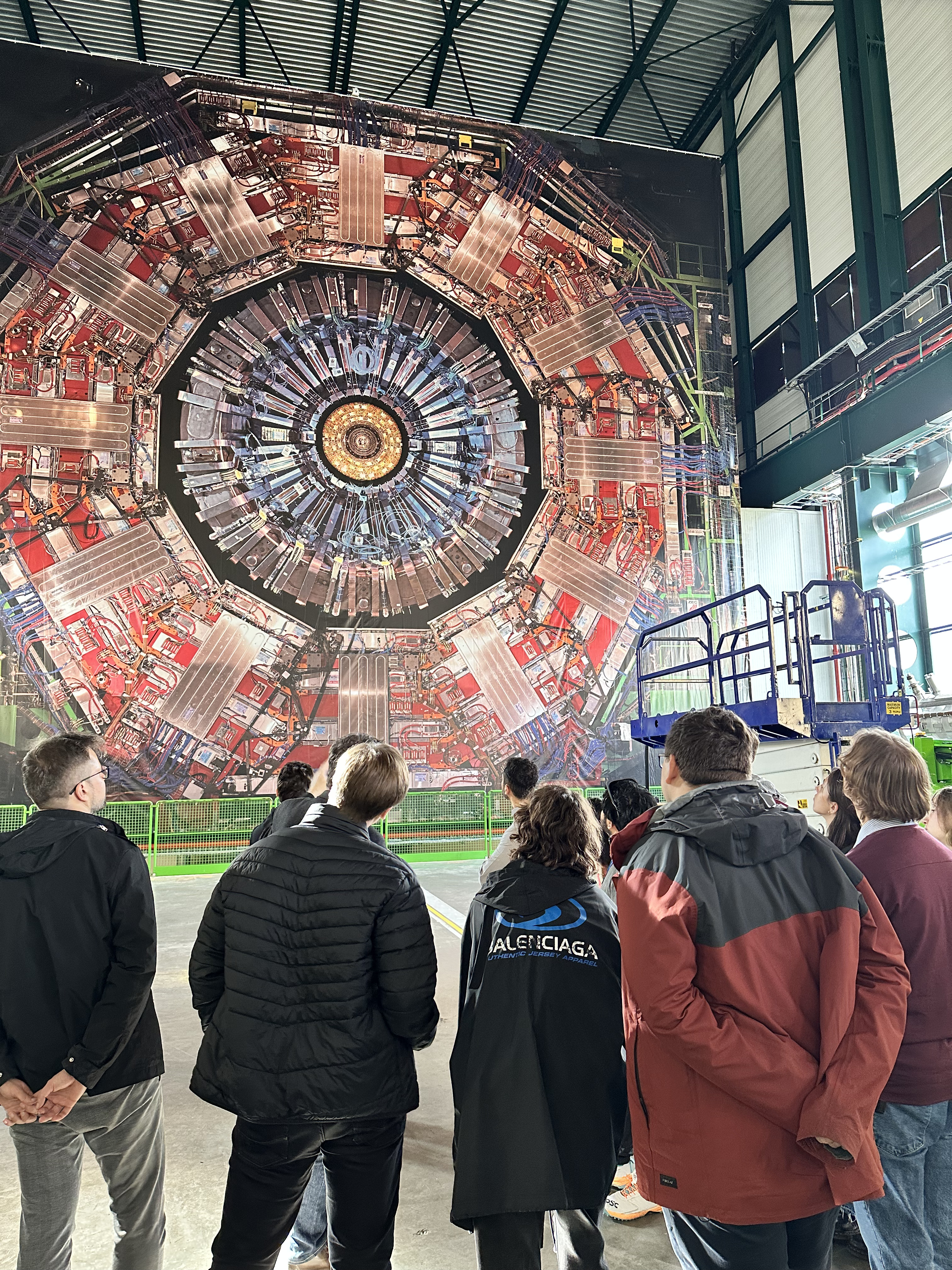
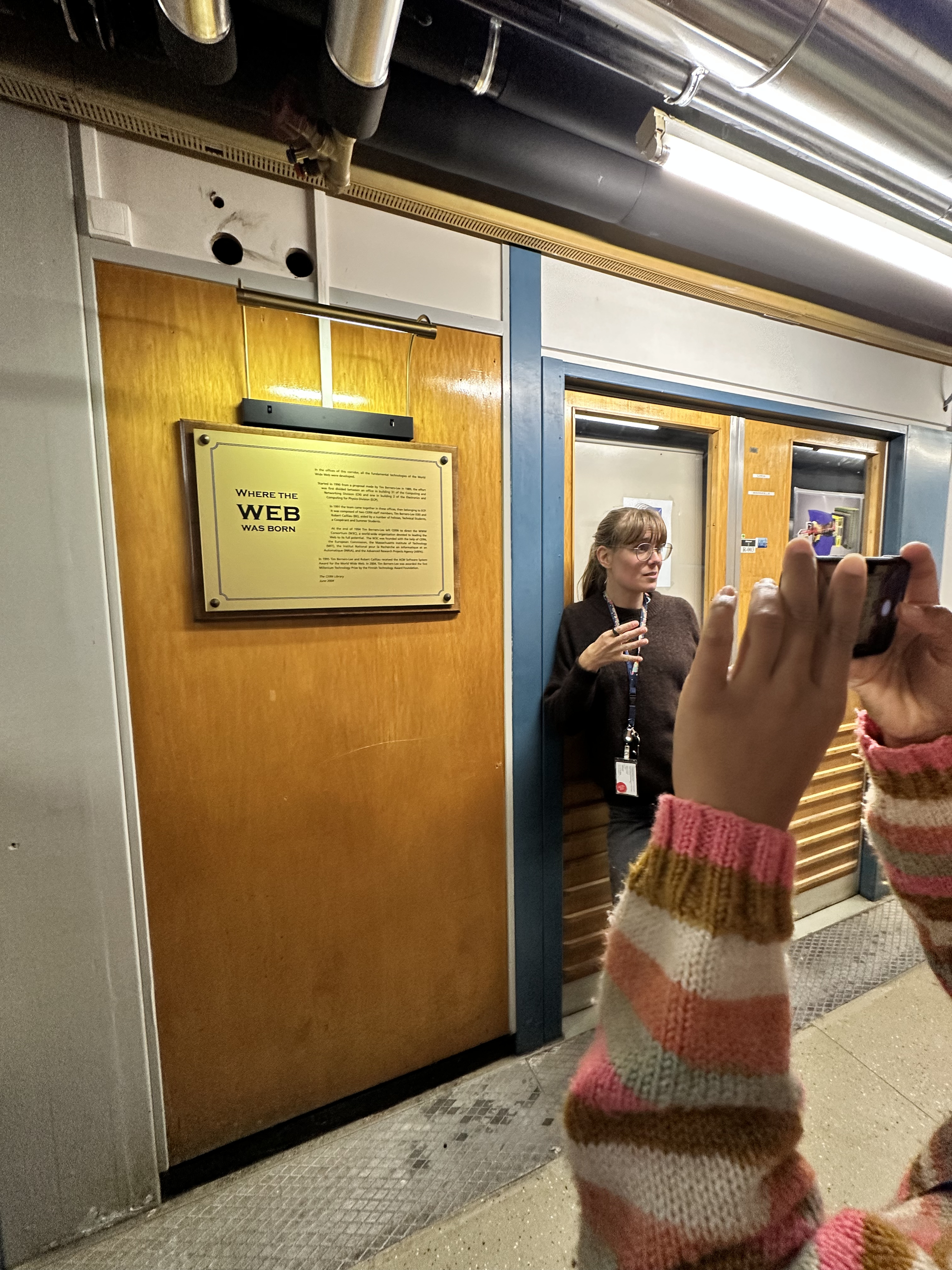
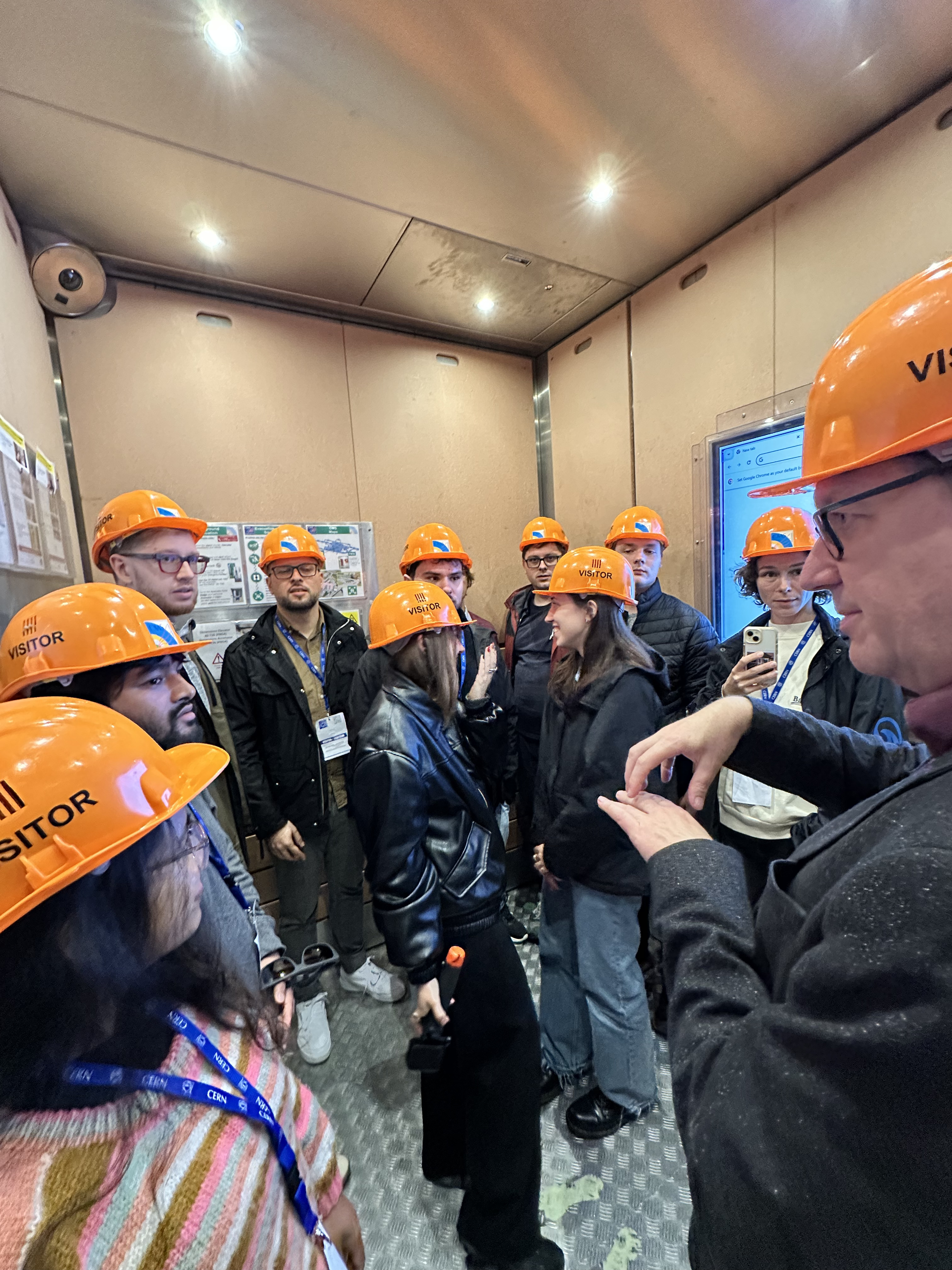
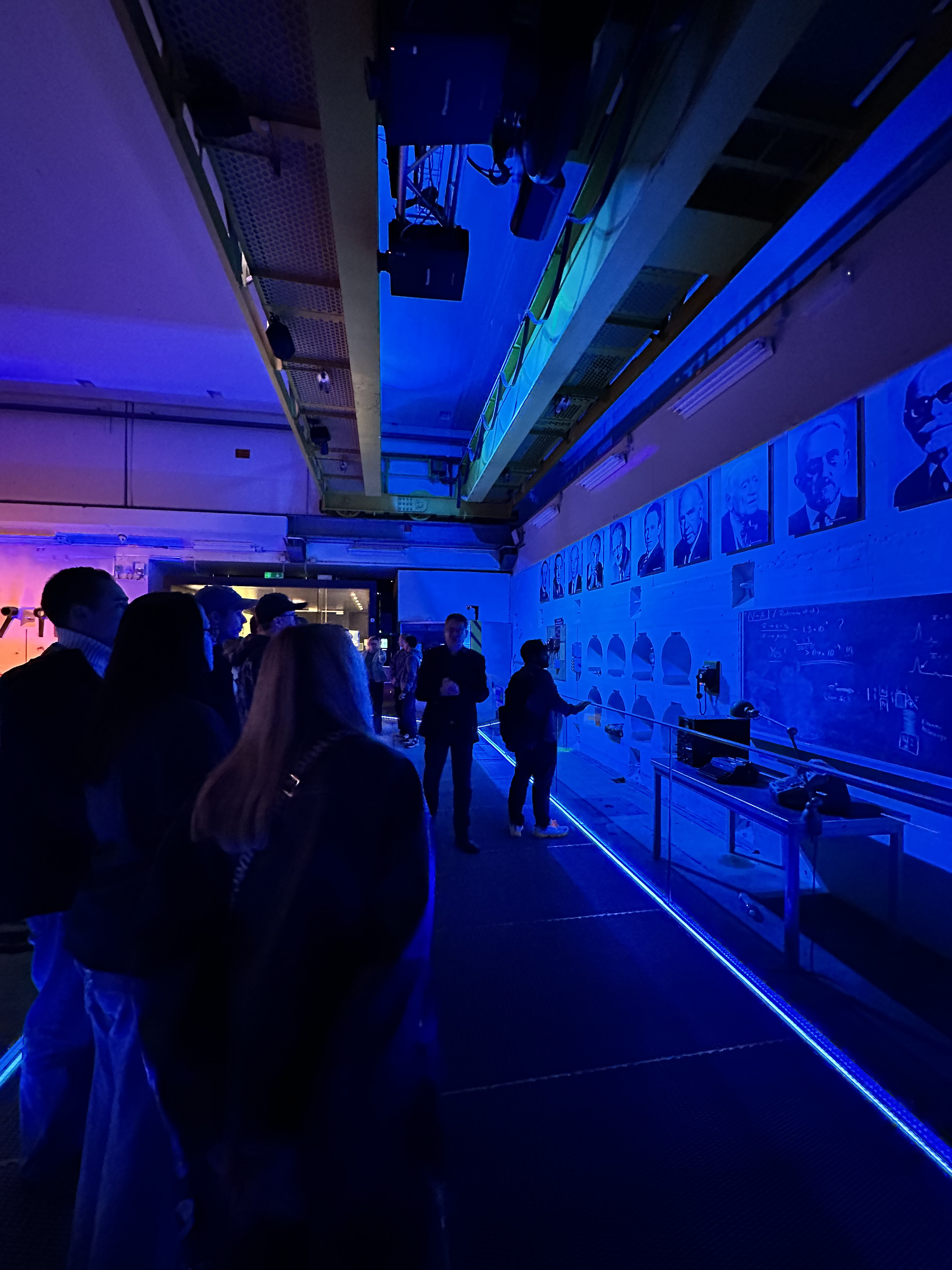
DeepTech Entrepreneurship students gain exclusive insight into the global innovation ecosystem through a study visit to CERN in Geneva:
Visiting SC – the first accelerator of CERN, the office where the WWW was born, the CMS experiment. As well as: Science Gateway, and the Data Center.
 |
 |
 |
 |
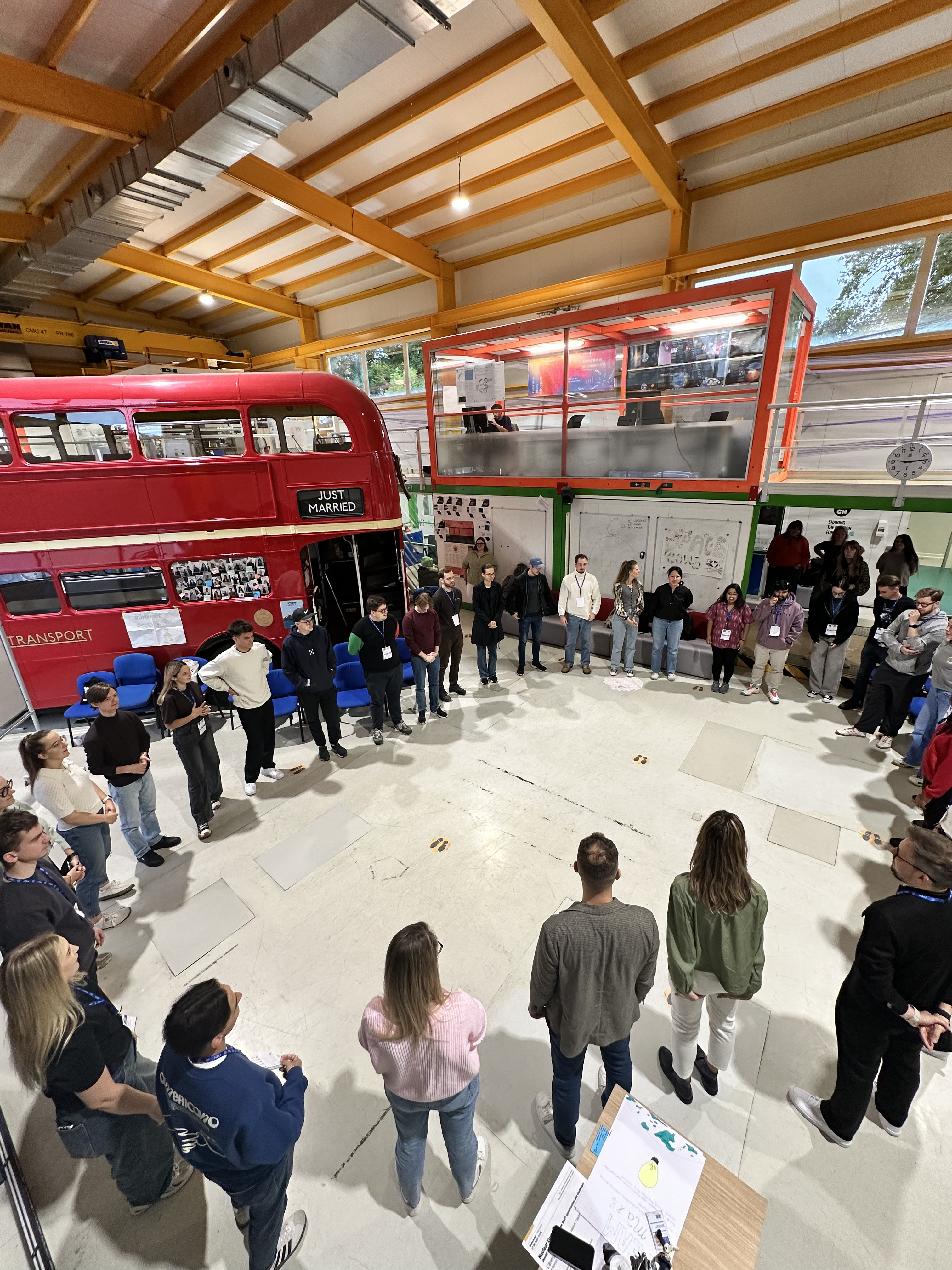
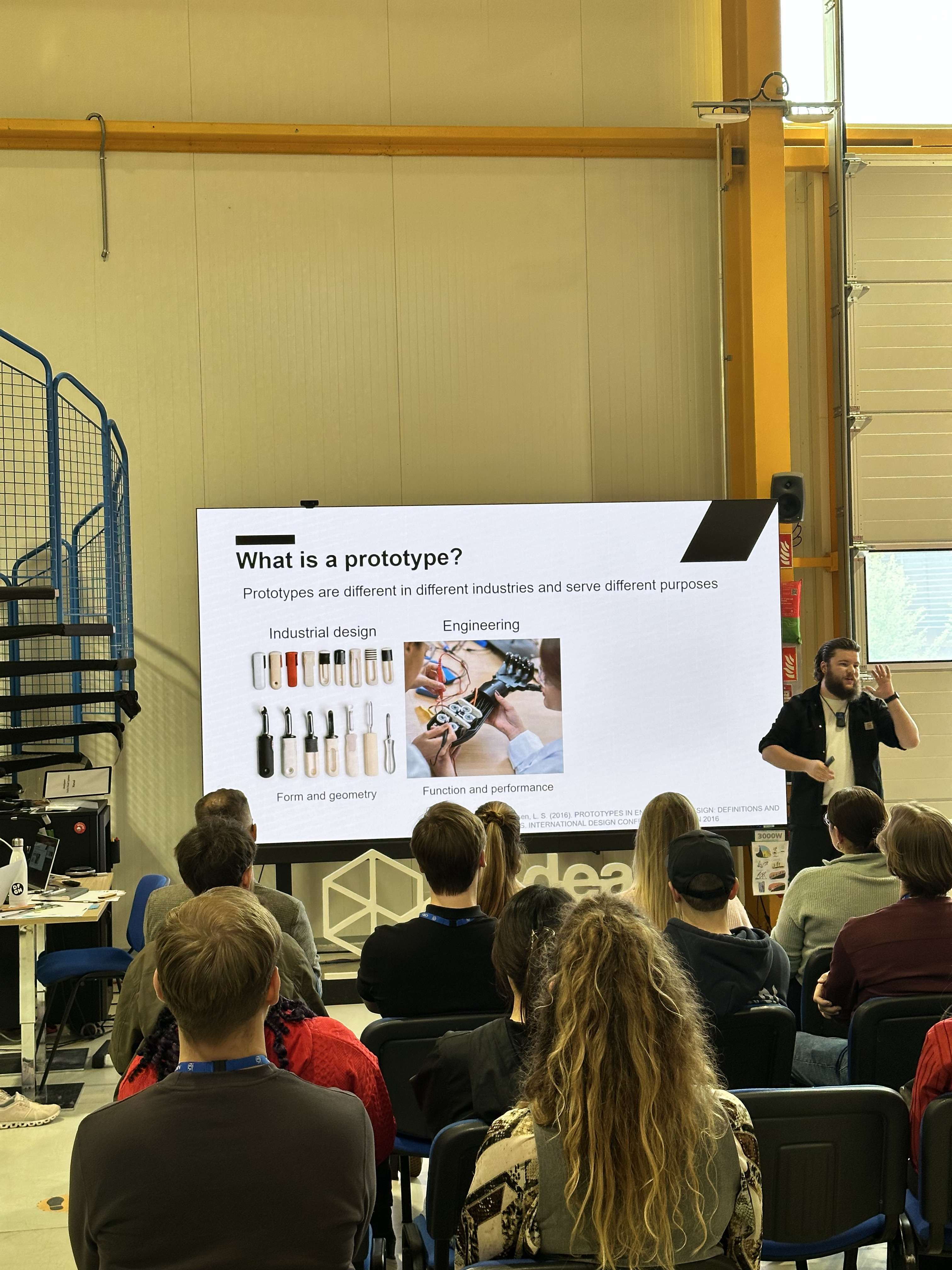
Working on the CERN project challenge – from brainstorming to prototyping – at the IdeaSquare, the innovation space at CERN.
 |
 |
Admission
| General admission requirements and selection criteria |
|
● Bachelor`s degree (university diploma) in Business and Management or in Management and Business Administration or Economics. ● Bachelor`s degree (university diploma) or equivalent, and have at least 20 credits in business and / or economics. ● Bachelor's degree or an equivalent university diploma in another field and have at least one years work experience related to the desired/intended study program.* ● Bachelor`s degree (colege diploma) in Business and Management or in Management and Business Administration or Economics with not less than 8 weighted average and have at least one years work experience related to the desired/intended study program.* * For Lithuanian applicants only |
| For all Lithuanian and EU applicants |
|
0.5 × VS + 0.5 × D + P Where:
Additional points may be awarded when applying to state-funded or non-funded places:
For the DeepTech Entrepreneurship programme, 1 point is awarded to applicants holding a bachelor’s degree in the following fields:
|
| For International applicants |
|
● English language proficiency: - the level not lower than B2 (following the Common European Framework of Reference for Languages (CEFR). - If your first language is English and/or if you have a university degree in English, you will be exempt from providing an English language test score. ● Applicants with an overall grade average of at least 70% are eligible for admission. ● For non-EU/EFTA applicants: the gap since you completed Bachelor degree should not exceed five years. ● If qualifications match the program, the applicant will receive an invitation to pre-record a video interview. More details will be provided during the application.* ● Applicants from Bangladesh, Nepal and Pakistan must submit OMPT-A (Online Mathematics Placement Test) Certificate (minimum passing grade – 55%). More information can be found HERE. * The Vilnius University Business School Admission Committee might invite their candidate for a face-to-face interview. |

Financing
| TYPE OF STUDY FINANCING FORM | TUITION FEE/SEMESTER |
| Own-funded study place for non-EU/EFTA countries* | 3275 Eur |
| Own-funded study place for EU/EFTA, Ukraine, and for graduates of other Lithuanian universities* | 2725 Eur |
| Own-funded study place for VU/VUIBS alumni/VU Exchange students |
2345 Eur |
* The standard tuition fee (2345 Eur) applies to students admitted in the 2025/2026 academic year who complete their first autumn semester with a GPA of at least 95%. Academic performance is reviewed individually each semester.
During their studies, students may apply for VU Business School scholarships, social, incentive scholarships, and others. The information is announced every year through Business School communication channels.

Students who finish a semester at VU BS with a perfect GPA (10.0) are granted up to 1000 EUR excellence scholarship. This scholarship can be earned every semester – excellence is rewarded continuously.
Be among the TOP 5 STUDENTS in your program (based on admission score or GPA for international students) and study for the regular tuition fee. Both Lithuanian and international applicants compete in the same ranking.
Academic counceling
At VU Business School we pay a lot of attention to students' academic counseling. If you have any questions during your studies, you can contact your study coordinator to solve any problem or just to talk.
During the studies, all relevant information will be delivered by the study coordinator.
Please meet the study coordinator for this study program:
 |
Aušra Sakalauskytė tel. +370 698 00 073 |

Diploma
University studies shall be completed when all requirements of the chosen full-time study programme are fulfilled. Graduates of University study shall receive a diploma certifying hereof.
If students fulfill the first and second cycle full-time study programmes with especially high results, they are issued a special CUM LAUDE diploma. If students fulfil the second cycle full-time study programme or the integrated study programme with especially high results and have distinct scientific competence, they are issued a special MAGNA CUM LAUDE diploma.
Diploma Supplement which identifies study subjects, their content, and results, is issued together with diploma. Diploma Supplement is a document that complies with the model agreed by the European Commission, the Council of Europe and UNESCO/CEPES; it supplements a higher education, Master or Bachelor diploma with the data required for international academic and professional recognition, provides a description of the nature and contents of the studies completed by its holder and gives details on the national higher education system.
Diploma Supplement is produced in Lithuanian and English and is issued to all graduates since 2006 automatically and free of charge as an integral part of diploma.
Committee
The Study Program Committee is a collegiate governing body responsible for ensuring and continuously improving the quality of the study program.
The Committee monitors the relevance and currency of the program's content, analyses academic outcomes and student achievements, and initiates program updates in response to labour market developments and feedback from academic staff, students, and social partners.
The Committee includes student representatives and external partners from the business and public sectors, ensuring a broader perspective on program quality:
 |
 |
 |
 |
|
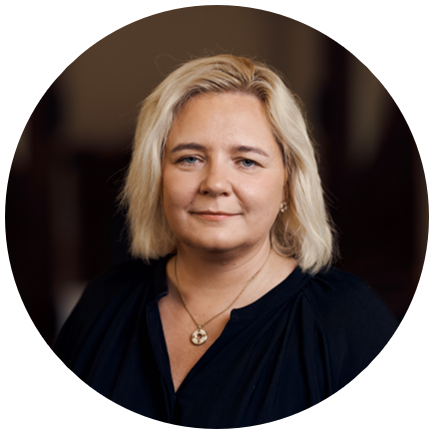
Prof. PhD. Saulė Mačiukaitė-Žvinienė
Chairman of the committee |
Associate Professor of Partnerships Robertas Vyšniauskas
|
PhD. Vytautas Stepas
|
Associate Professor PhD. Eglė Radvilė
|
 |
 |
||
|
Professor PhD. Pranciškus Vitta
|
Professor PhD. Christoph Shaefer
Representative of social partners |
Representative of students (2) |
|

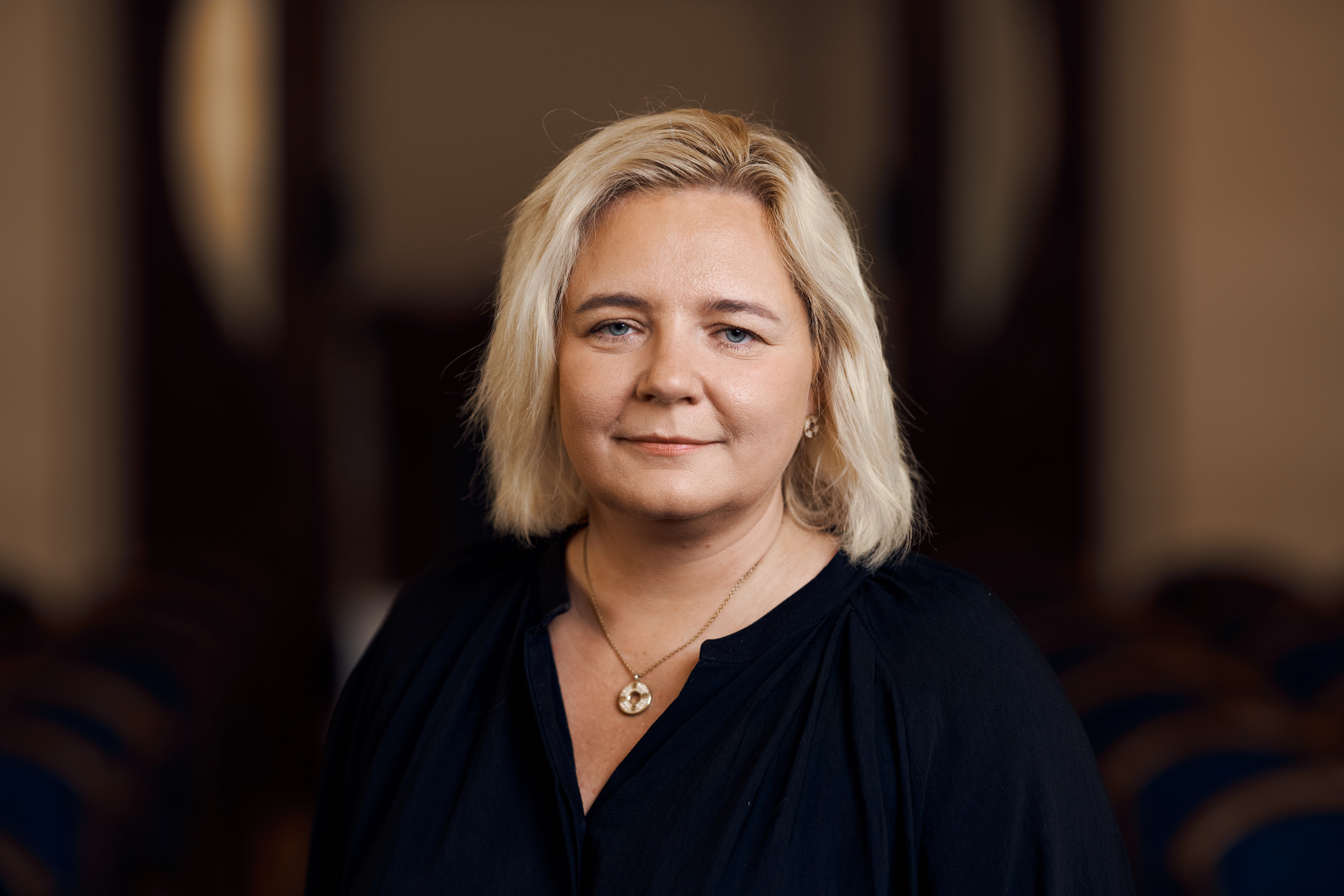
Prof. Dr. Saulė Mačiukaitė-Žvinienė
|
"Anyone who wants to power the changes, to accelerate an innovative idea can make an excellent start at studying DeepTech Entrepreneurship programme at Vilnius University Business School. It is the MSc programme that blends academic knowledge, startup accelerator, venture builder skills and unique experience to prepare the next generation of technology entrepreneurship. It is a pack for tomorrows entrepreneurs. Students learn how to become noticed in this world, how to make their ideas pass, to define opportunities and obstacles for innovation, to run a start up or re-load a business. Students will develop effective entrepreneurship techniques, learn how to merge science and business and become frontiers of the future prosperity. Throughout the process, the teams are assisted by academic and business mentors and have advantage to test their ideas at BIC of CERN technologies, to pitch their ideas to investors and global hackathons. Vilnius University Business School in cooperation with CERN, scientists of physics and mathematics open a new page in higher education system by transforming traditional mindsets and creating a new culture of business, technology and leadership. DeepTech Entrepreneurship programme is for anyone who wants to shake the industry and to become the next Steve Jobs, Daniel Ek or Mark Zuckerberg. This is the programme where I believe the future unicorns will start their long, but exciting journey. And Vilnius University is the place where value-driven innovation culture combines fundamentals of entrepreneurship and technology pioneered solutions. " Prof. Dr. Saulė Mačiukaitė-Žvinienė Head of Study Programme President @National Council of Education |
 |
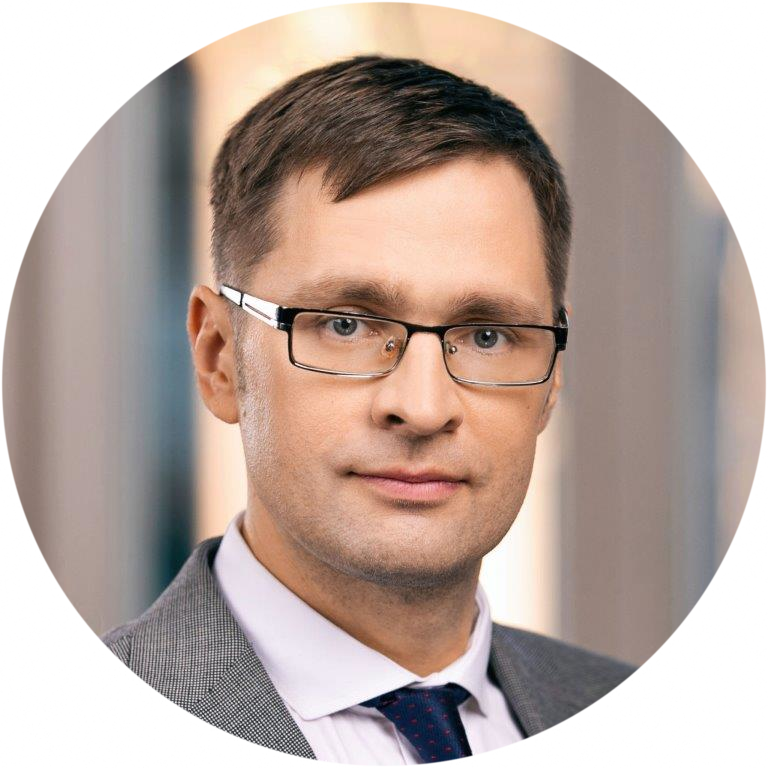
Prof. Dr.Christoph Schäfer
 |
The European Centre for Nuclear Research (CERN) was founded in 1954 and its mission is to explore and understand the elementary particles and their interactions on which our universe is built upon. Hence, CERN is fully dedicated to fundamental research, and in order to pursue it, CERN makes intensive use of applied science needed in the conception, construction and operation of one of the biggest experimental apparatus scientists have ever done their experiments with. Prof. Dr. Christoph Schäfer
Senior adviser @CERN
|
Dr. Birutė Miškinienė
|
Tomorrow's challenge starts from choosing DeepTech Entrepreneurship programme. As monetisation of technology in its early stage can be difficult to predict, participants also need to build use cases and define the value of participating in them before developing business models. Deep tech entrepreneurship plays a central role in the development of new scientific discoveries and their transfer to commercial applications. That's a very ambitious programme having access to CERN.
Dr. Birutė Miškinienė Director @Business School |
 |
Career
ALUMNI I Viktorija Kundrotaitė: The Result of Business Studies – Managing a Horse Ranch
ALUMNI I Antanas Bernatonis, who Founded Lithuania’s First AI Agency
ALUMNI I Deividas Tokaris: From an International Business Bachelor’s Degree to an Agency Generating Million-Euro Sales
ALUMNI I Linas Marcišauskas: Business Studies for Content Creators
ALUMNI I Julija Jeršova: From an International Business student to an AirBaltic pilot
ALUMNI I Rapolas Sausaitis. Entrepreneurial Thinking That Inspired the Trendy Bar Business
ALUMNI I Romanas Lipovič. From Business Studies to Building Own Business – Wantly.


 +370 612 46 044